Rolling Resistance Showdown: Low Rolling Resistance vs All-Season vs Summer Tires for Maximum MPG

Selecting the right fuel economy tires can boost your car’s MPG by up to 10%. This guide compares low rolling resistance, all-season, and summer tires to help you maximize efficiency without sacrificing safety.
The Science of Rolling Resistance
Rolling resistance is the energy lost as a tire deforms while rolling, accounting for 15–20% of a vehicle's fuel consumption. Tread compound and pattern directly influence this loss: softer compounds increase hysteresis, wasting energy as heat.
For maximum mileage, choose a hard compound with a smooth, shallow tread.
Manufacturers measure rolling resistance coefficients (RRC) in lab tests. A lower RRC translates to better fuel economy tires, but often means reduced wet grip.
Understanding this trade-off is key to selecting the right fuel economy tires for your needs.
Low Rolling Resistance Tires: The Efficiency Champions
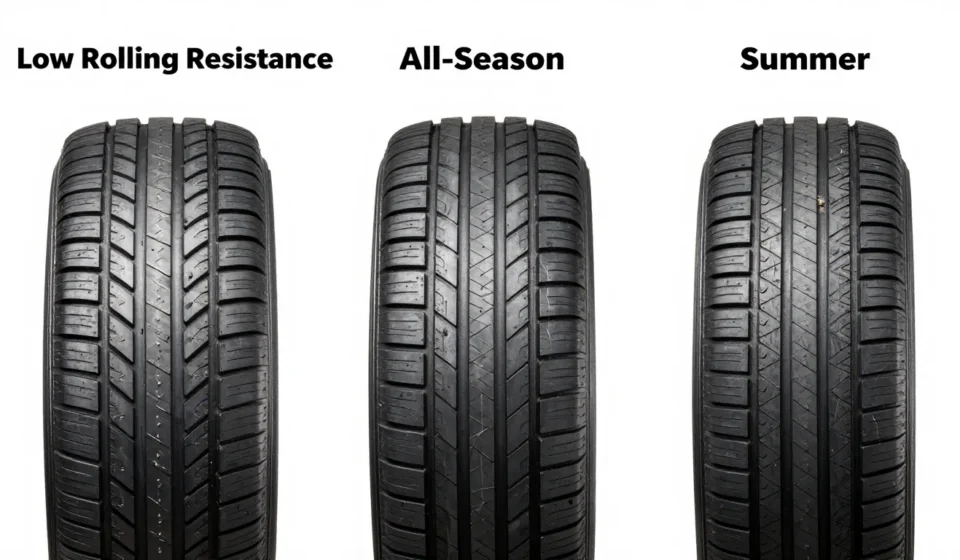
Low rolling resistance (LRR) tires use specialized silica compounds and optimized tread patterns to minimize energy loss. They often feature continuous center ribs and narrow grooves to reduce deformation.
The result is a 5–10% improvement in fuel economy compared to standard all-season tires.
However, LRR tires sacrifice grip, especially on wet roads, with braking distances increasing up to 15% versus performance all-seasons. They also wear faster if driven aggressively.
For pure commuting, these fuel economy tires are the best choice for MPG.
All-Season Tires: The Compromise
All-season tires balance rolling resistance with year-round traction. Their tread compounds are moderately hard, and patterns include sipes and wider grooves for water evacuation.
Real-world fuel economy is typically 2–4% worse than dedicated fuel economy tires.
If you face occasional rain or mild winter conditions, a modern all-season like the Michelin Defender 2 provides excellent longevity and decent rolling resistance. It won’t beat dedicated fuel economy tires on MPG, but the versatility may justify the slight loss.
Summer Tires: Grip vs Fuel Economy
Summer tires are engineered for maximum dry and wet grip using soft rubber compounds. Their rolling resistance is the highest of the three categories – expect 8–12% worse fuel economy than LRR tires.
Summer tires are not fuel economy tires; they prioritize handling over efficiency. Unless you prioritize cornering and braking precision over every penny of gas, summer tires are the worst choice for fuel economy.
They are designed for performance, not efficiency. Only fit them if you accept the MPG penalty for handling benefits.
Real-World MPG Comparisons
Independent testing by Tire Rack shows that switching from a premium all-season to an LRR tire can yield 3–5 MPG improvement on highways. For example, a Toyota Camry averaging 32 MPG on all-seasons might see 34–35 MPG with LRR tires. Summer tires on the same car could drop MPG to 29–30.
Consumer Reports confirms that LRR tires consistently rank highest in fuel efficiency, but note that braking distances increase. They recommend fuel economy tires for drivers who cover over 15,000 miles per year primarily on highways. Proper tire pressure also plays a key role: under-inflated tires can increase rolling resistance by up to 10%.
Drivers of hybrid vehicles benefit even more from low rolling resistance tires, as the electric motor’s efficiency is amplified by reduced resistance. This makes fuel economy tires an ideal match for hybrid powertrains.
Fuel Economy Tires: The Clear Winner for MPG
If fuel economy is your top priority, fuel economy tires (LRR) are the clear winner. However, consider your climate and driving habits. For moderate climates with occasional rain, a high-quality all-season tire offers a better balance.
Check the tire's UTQG rating and rolling resistance grade (A–C). A Tire Rack test found that B-rated tires use about 3% more fuel than A-rated ones.
Always maintain proper tire pressure to maximize efficiency. Ultimately, fuel economy tires deliver the best MPG, but choose based on your driving needs.