
Why Jack Stands Are Non-Negotiable
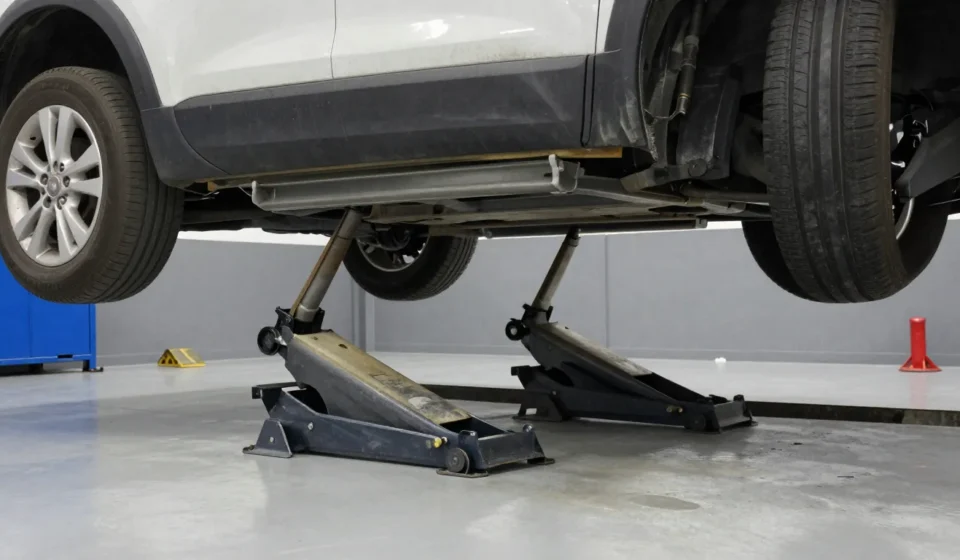
Relying solely on a hydraulic jack to support your car while you work underneath is a death sentence. Jack up car safety demands that you always use jack stands rated for at least 1.5 times your vehicle’s weight. A floor jack can fail hydraulically or slip off its lifting point, crushing you if your body is in the wrong place.
Jack stands provide a rigid, mechanical lock. Place them on solid concrete or asphalt, never on gravel or loose dirt.
Inspect stands for cracks, bent teeth, or rust before each use. Remember, jack up car safety means never trusting a jack alone.
Mastering this principle is the core of jack up car safety.
Step 1: Choose a Level, Hard Surface
Find a flat, dry area—your garage floor is ideal. If you must work on a slope, chock the wheels thoroughly and use additional stands.
Never jack up a car on grass or asphalt softened by heat; the base will sink, destabilizing the vehicle. This is a fundamental rule of jack up car safety.
Engage the parking brake firmly. Place wheel chocks on the opposite end of the car: if lifting the front, chock both rear wheels.
For extra security, chock both axles.
Step 2: Locate Your Vehicle’s Lifting Points
Cars have designated zones for lifting. Look in your owner's manual; they are often marked as reinforced metal pads on the pinch welds or subframe.
The front crossmember (on some vehicles) or the rear differential housing are also suitable lift points. Knowing these points is essential for jack up car safety.
Never lift by: the oil pan, transmission pan, suspension arms, or exhaust pipes. Distributing the load to a flat, strong area prevents crushing or puncturing critical components.
Step 3: Position the Jack Correctly
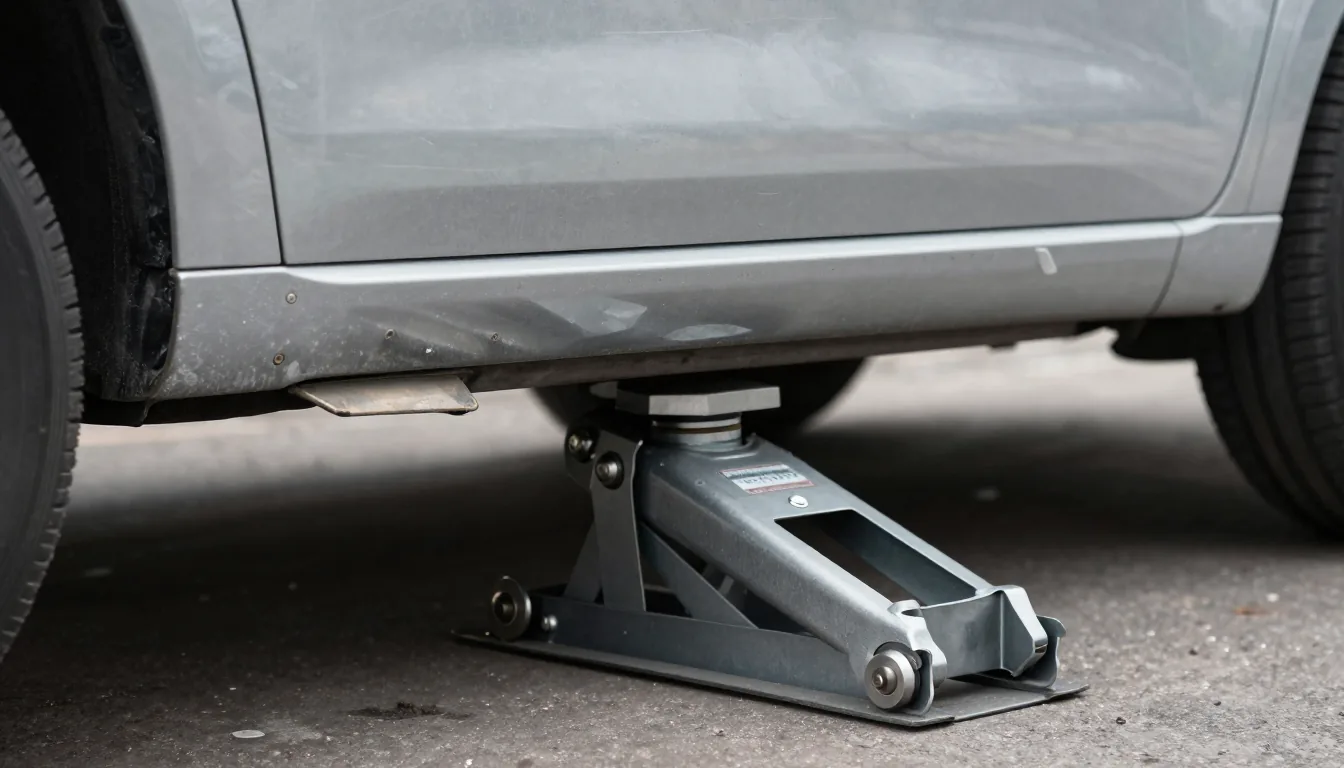
Align the jack saddle directly under the center of the lifting point. Make sure the contact is flush—a tilted jack causes side-loading, increasing the risk of slipping.
For pinch welds, use an adapter that cups the weld without bending it.
Pump the jack slowly. As the car rises, stop briefly at each inch to check that the jack remains stable and the contact point hasn't shifted.
If you hear creaking or see deflection, lower immediately and adjust. Proper positioning is a key aspect of jack up car safety.
Step 4: Insert Jack Stands at Proper Height
Jack stands have a locking pin or ratchet mechanism. Set both stands to the same height, leaving room for the car to be lowered gently onto them.
Position them under the manufacturer-recommended frame rails or subframe, close to the lifted point but not touching it while the jack supports the weight.
Raise the car a few extra inches above the stand height, then carefully lower the jack until the car rests fully on the stands. Give the car a firm shake from the bumper.
If it wobbles, recheck placement. Accurate stand placement is vital for jack up car safety.
Step 5: Double-Check Load Distribution
Before sliding under the car, ensure the weight is evenly distributed across both stands. The car should sit level.
If using two floor jacks, synchronize lifting to avoid racking the chassis.
Apply a second set of jack stands as a backup if you’re performing heavy work (e.g., dropping a transmission). Also, place the removed tire or a thick wood block under the car’s sill as a last-ditch safety measure.
Common Jack Up Car Safety Mistakes That Kill
Using a scissor jack for anything but tire changes: Scissor jacks are unstable and lack a wide base. They are not a substitute for a floor jack and stands.
Not chocking the wheels: A car can roll off the jack stands if not immobilized. Even on level ground, a bump can move it.
Overloading stands: Check the weight rating printed on the side of each stand. Sum both ratings if using two; the weakest stand limits capacity.
Working alone without supervision: Always have someone nearby who can call for help if the car falls.
Conclusion: No Shortcuts
Proper Automotive & Mobility maintenance demands respect for gravity. The few extra minutes spent on chocking, positioning stands, and verifying lift points are worth your life. For more details, consult the NHTSA jack stand safety page or your vehicle’s service manual available at Helm Incorporated.