
Understanding Turbocharger Failure
A turbocharger operates under extreme conditions—up to 150,000 RPM and exhaust gas temperatures exceeding 900°C. Mastering failing turbocharger diagnosis begins with recognizing early warnings before catastrophic engine damage occurs.
Effective failing turbocharger diagnosis requires a systematic approach to symptoms and hands-on tests. This guide covers the most reliable indicators and procedures to assess turbo health.
Turbo failure often stems from oil starvation, contamination, or age-related wear. The key is to act on the first warning signs.
Neglecting them can lead to metal debris entering the engine, requiring a full rebuild.
Primary Symptoms of a Dying Turbo
Unusual Noises
A healthy turbo produces a smooth whistle from air compression. A failing unit emits a high-pitched whine or screech, indicating worn bearings or a damaged shaft.
A grinding noise suggests metal-on-metal contact from debris or lubrication failure. Listen during acceleration and deceleration; the worst sounds often occur when boost pressure changes.
Another noise is a constant hissing, which points to an air leak in the intake or exhaust system. This reduces boost and can mimic turbo failure, so check hoses and intercooler connections first.
Power Loss and Boost Drop
If your car feels sluggish, especially during hard acceleration, the turbo may not be building proper boost. A boost gauge that fails to reach normal levels (or fluctuates erratically) is a clear indicator.
Common causes include a stuck wastegate, blown diverter valve, or turbine blade damage. Compare actual boost against manufacturer specifications.
Engine management systems often trigger a check engine light with codes like P0299 (low boost) or P0234 (overboost). Use an OBD-II scanner to retrieve these codes; they narrow down the fault area.
Smoke from Exhaust
Blue smoke under acceleration indicates oil leaking past the turbo seals into the exhaust. White smoke on startup can mean coolant leaking into the combustion chamber or turbo housing.
Black smoke signals excessive fuel (rich mixture) due to reduced air supply from low boost. Observe smoke color and timing—consistent blue smoke is a strong cue for turbo seal failure.
Oil Leaks
Oil puddles under the car or oil residue around the turbo compressor housing, charge pipes, or intercooler point to a failed seal. Worn journal bearings allow oil to bypass the shaft and enter the intake or exhaust.
Check the turbo inlet and outlet pipes for wetness. Also inspect the oil return line—clogging here can cause seal blowout.
Failing Turbocharger Diagnosis: Essential Tests
Visual Inspection
Start with a thorough visual inspection. Remove the air intake pipe and check the compressor wheel for cracked, bent, or missing blades.
Shine a light into the turbine housing from the exhaust side to assess the turbine wheel. Look for excessive oil wetness or carbon buildup.
Check all clamps, hoses, and the intercooler for leaks. This visual check is a cornerstone of failing turbocharger diagnosis.
Shaft Play Test
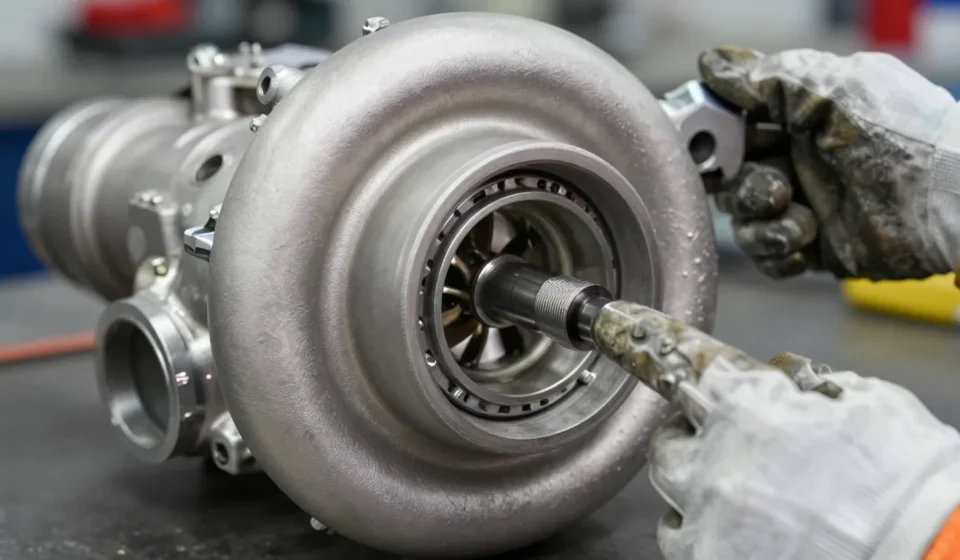
With the intake duct removed, grasp the compressor nut and try to move the shaft radially (side-to-side) and axially (in-and-out). A tiny amount of radial play (0.002–0.003 inches) is normal on journal bearing turbos.
Anything beyond that, especially axial play, indicates bearing wear. Ball bearing turbos should have almost zero play.
Excessive play means rebuild or replacement is necessary.
Measuring shaft play is a critical step in failing turbocharger diagnosis; it reveals bearing condition directly.
Boost Pressure Test
Connect a boost gauge to the intake manifold or use an OBD-II scanner with a MAP sensor readout. Perform a road test under full throttle in 3rd or 4th gear.
Note the peak boost pressure and compare with spec. A slow rise, inability to reach target, or spikes above target all indicate problems.
Alternatively, use a smoke machine to pressurize the intake system and locate leaks.
A boost pressure test is a definitive tool in failing turbocharger diagnosis, confirming whether the turbo builds required pressure.
Oil Supply and Drain Check
Inspect the oil feed line for restrictions. Remove the feed line at the turbo and crank the engine briefly—oil should flow freely.
Check the drain line for kinks or blockages. A plugged drain line causes oil to back up and leak past seals.
This test is a vital part of failing turbocharger diagnosis.
Step-by-Step Diagnosis Guide
Step 1: Gather symptoms—noises, smoke, power loss. Step 2: Perform visual and shaft play checks.
Step 3: Conduct a boost pressure test. Step 4: Check oil supply and drainage.
Step 5: Scan for fault codes. Combine findings to pinpoint the root cause of failing turbocharger diagnosis. For example, a boost leak may mimic turbo failure; isolate intake system leaks before condemning the turbo.
If you’re not confident, consult a professional. Our Automotive & Mobility section has more guides on forced induction systems.
When to Replace vs Repair
Minor issues like a leaking hose or stuck wastegate can be fixed individually. But if the turbo itself has damaged bearings, cracked housings, or bent wheels, replacement is the only reliable solution.
Rebuilding a turbo is cost-effective only if the core is intact—often not worth it on modern units. Factor in labor: a DIY replacement saves money, but requires precision.
For further reading, check Garrett’s official turbo failure analysis and Diesel Power Products’ root cause guide.