
10 Most Aerodynamic Production Cars: Engineering Secrets Behind Their Silhouettes

When it comes to maximizing range and top speed, aerodynamic production cars set the benchmark. A low drag coefficient (Cd) directly reduces energy consumption, whether the powertrain is electric or internal combustion. This list examines ten production vehicles that achieve the lowest Cd values, explaining the engineering details that make them slice through air with minimal resistance.
Why Drag Coefficients Matter
Drag coefficient is a dimensionless number measuring how easily a shape moves through air. For every 10% reduction in Cd, an EV's range can improve by roughly 5% at highway speeds.
That's why automakers invest heavily in wind tunnel testing, active grille shutters, underbody panels, and flush surfaces.
For aerodynamic production cars, every detail from active shutters to sealed underbodies contributes to efficiency. These innovations are not just for hypercars—they increasingly appear on mainstream models.
Top 10 Aerodynamic Production Cars
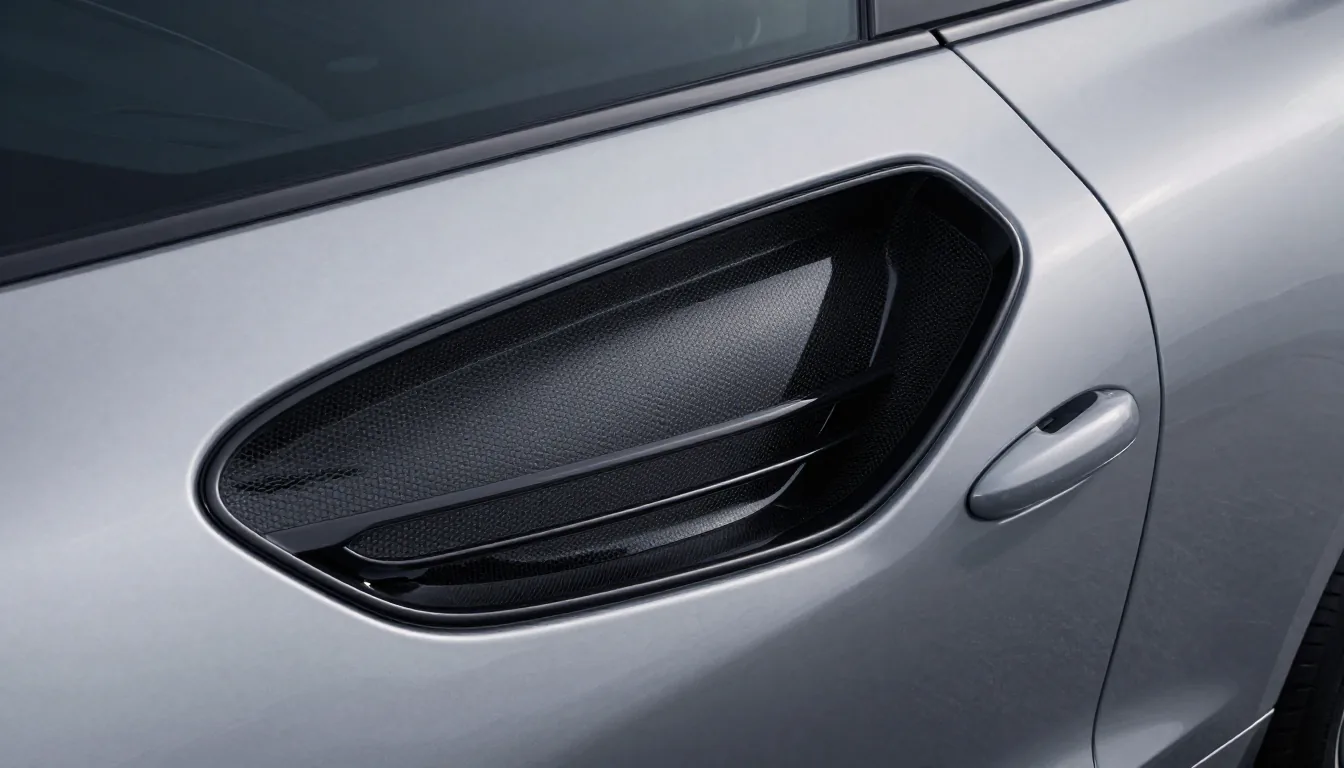
The following list highlights the most aerodynamic production cars available today, each pushing the boundaries of low-drag design.
1. Lucid Air Dream Edition – Cd 0.197
The Lucid Air holds the production car drag record. Its teardrop shape, fully sealed underbody, and active rear diffuser contribute to this class-leading figure.
The Dream Edition's 113 kWh battery pack achieves an EPA-rated 520 miles, largely thanks to aerodynamic efficiency.
2. Mercedes-Benz EQS – Cd 0.200
Mercedes' flagship EV uses an extremely sharp front end, flush windows, and optional heat pump air shutters. The EQS's Cd of 0.200 ensures a range of up to 350 miles despite a relatively large frontal area.
Active suspension lowers the car at speed to further reduce drag.
3. Tesla Model S Plaid – Cd 0.208
Tesla’s revised Model S features a redesigned front bumper, hidden door handles, and a rear spoiler that deploys automatically. The Plaid’s Cd of 0.208 helps it achieve 520 hp and a 396-mile range while reaching 200 mph.
4. Hyundai Ioniq 6 – Cd 0.21
The Ioniq 6 adopts a “streamliner” profile inspired by the 1930s. Active air flaps in the grille, wheel air curtains, and a flat underbody bring Cd down to 0.21.
This enables a 361-mile range on the WLTP cycle, besting many larger sedans.
5. NIO ET7 – Cd 0.208
China's NIO ET7 matches the Tesla at 0.208. Its design relies on a sloping roofline and hidden lidar pods.
The electric sedan uses a 150 kWh semi-solid-state battery for up to 620 miles (NEDC), though real-world range benefits heavily from its slipperiness.
6. Porsche Taycan – Cd 0.22
While the Turbo S tops at 260 mph, Porsche optimized the Taycan's body for stability first, then drag. Active rear spoilers and adaptive cooling vents maintain a 0.22 Cd.
The result is long-range capability without sacrificing the iconic Porsche handling.
7. Audi e-tron GT – Cd 0.24
Sharing its platform with the Taycan, the e-tron GT achieves a slightly higher Cd due to different bodywork. However, its active grille shutters and extensive underbody covers still contribute to a competitive 238-mile EPA range.
The low slung stance helps reduce turbulent wake.
8. BMW i4 – Cd 0.24
BMW's compact electric sedan uses a kidney grille with active flaps and a sleek roofline. The i4 eDrive40 achieves 301 miles of range.
Aerodynamics are aided by narrow digital rearview mirrors and a carefully shaped rear bumper that minimizes drag around the wheels.
9. Toyota Prius (2023) – Cd 0.25
The latest Prius hybrid cuts Cd to 0.25, down from 0.33 on older models. Key changes include a ventilated rear diffuser, flush A-pillar design, and active grille shutters.
This directly improves fuel economy to 57 mpg combined, proving aerodynamics aren't just for EVs.
10. Chevrolet Bolt EV – Cd 0.26
Despite its upright hatchback shape, the Bolt achieves a respectable 0.26 Cd through extensive underbody panels and a sloping rear window. That helps the 65 kWh battery deliver 259 miles of real-world range.
Active thermal management also reduces aerodynamic penalties at high speeds.
Practical Implications for Buyers
If you commute primarily at highway speeds, prioritize aerodynamic production cars with low Cd values. Every 0.01 improvement can translate to 2–3 extra miles of EV range per charge.
Investing in an aerodynamic production car can save hundreds of dollars annually in fuel or electricity.
For gas cars, lower drag means fewer fill-ups. However, aerodynamic gains often trade off interior space or cargo volume, so test drive before committing.
Choosing among these aerodynamic production cars will depend on your priorities, but efficiency is guaranteed.
For more insights on vehicle design and efficiency, explore our Automotive & Mobility category. External resources like the EPA’s Green Vehicle Guide and Wikipedia’s Drag Coefficient Page offer deeper technical details.