
Why Most Baby Gear Is a Waste of Money
Let’s be honest: the baby industry is a master of selling you anxiety. They want you to believe you need a wipe warmer, a bottle sterilizer that doubles as a spaceship, and a diaper bag that costs more than your first car. But a minimalist baby checklist cuts through the noise.
But here’s the truth: babies need very little to thrive. After surveying hundreds of parents and combing through pediatric guidelines, I’ve whittled down the minimalist baby checklist to what you actually need—and what you can cheerfully skip.
The key is to buy items that serve multiple purposes and last beyond the newborn phase. This approach saves money, reduces clutter, and keeps your sanity intact.
Science backs this up: minimalism in baby gear reduces parental stress and promotes more responsive caregiving.
The Minimalist Baby Checklist: 7 Essential Items
Here is the definitive minimalist baby checklist for sane parents. Each item is a must-have.
1. A Safe Place to Sleep
A bassinet or a pack-and-play with a firm mattress works perfectly for the first few months. Skip the crib until your baby is ready to transition.
Many parents buy a crib only to have their baby sleep in a bassinet for six months.
Look for a simple, breathable design. The American Academy of Pediatrics recommends room-sharing without bed-sharing for the first year. For safe sleep guidelines, check the AAP Safe Sleep resources.
Remember: your baby doesn't care if the bassinet costs $50 or $500. A flat, firm surface with a fitted sheet is all they need.
Avoid adding bumpers, pillows, or stuffed animals—they increase SIDS risk.
2. A Car Seat (The Non-Negotiable)
This is the one item you should never buy used unless you know its full history. An infant car seat with a base is convenient, but convertible seats last longer.
Research shows that many parents install car seats incorrectly. Have yours checked by a certified technician (many fire stations offer this service). For installation tips, visit NHTSA Car Seat Safety.
Don’t be fooled by expensive brands. All car seats sold in the US meet federal safety standards.
The best one fits your car and your baby properly, and that you’ll use correctly every time.
3. A Baby Carrier or Wrap
You will need your hands free at some point—probably within the first hour of being home. A soft-structured carrier or a stretchy wrap allows you to bond, soothe, and multitask.
Babywearing also reduces crying and can help with reflux. Look for one that distributes weight well and supports your baby’s hips in an M-position.
Skip the expensive nomex carriers if you’re on a budget. A simple ring sling or a budget-friendly woven wrap works just as well. Check out resources like Babywearing International for safety tips.
4. Diapers and Wipes (But Not a Diaper Genie)
You’ll go through a mountain of diapers. Cloth or disposable?
The choice is personal, but cloth saves money long-term if you’re committed.
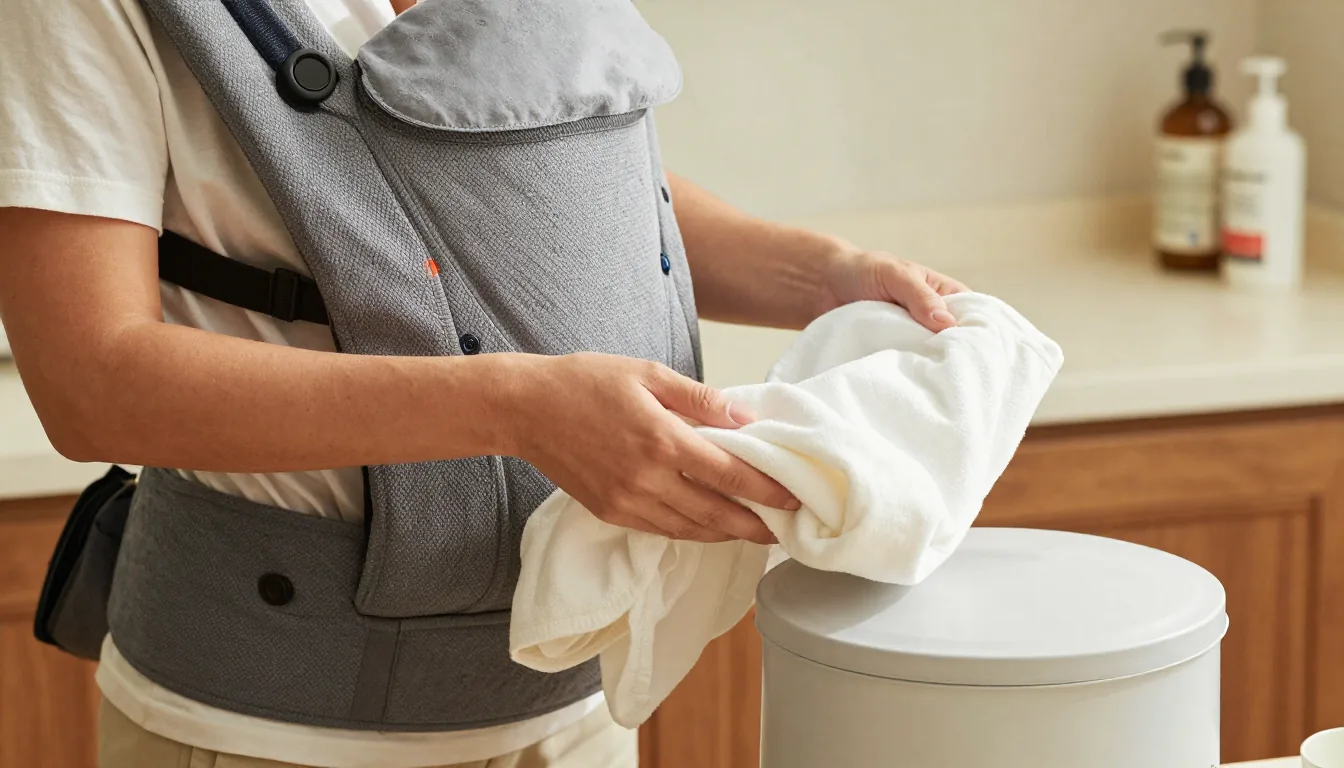
For wipes, get unscented, alcohol-free ones to avoid rashes. As for the diaper pail: a regular trash can with a lid works fine.
Diaper Genies are overpriced and often trap odors worse than a metal can with baking soda.
A minimalist baby checklist doesn’t need a diaper genie. Buy diapers in bulk during sales, but don’t stock too many newborn sizes—babies grow fast.
A minimalist approach means buying only one month’s supply at a time.
5. Simple Feeding Supplies
If breastfeeding, you’ll need a few bottles for expressed milk (or formula). Two or three bottles are enough to rotate.
A basic breast pump (manual or electric) can be essential for some, but you can often rent one from a hospital.
For formula, you just need clean bottles and a mixing pitcher. No expensive warmers or sterilizers are necessary.
Hot water from the tap works fine.
Solids come later, but when they do, invest in a set of silicone spoons and a few small bowls. Skip the baby food maker.
Steaming and mashing with a fork is just as effective and takes less counter space.
6. A Small Stash of Clothes and Swaddles
Babies outgrow clothes faster than you can blink. Buy a few onesies in each size (3-5 per size), a couple of footed sleepers, and a swaddle.
For swaddles, look for a simple muslin square (versatile for nursing covers, burp cloths, etc.) or a Velcro swaddle. Avoid elaborate multi-piece outfits.
You’ll change clothes multiple times a day due to blowouts and spit-up.
One clever hack: buy only gender-neutral colors and patterns for the first six months. That way you can use them for the next baby, regardless of sex.
That’s minimalist thinking.
7. A First-Aid Kit and Basic Hygiene Items
You’ll need a thermometer (digital rectal is most accurate for infants), nail clippers, a bulb syringe or snot sucker, and baby-safe moisturizer. A simple kit under $20 helps you avoid midnight panic trips to the pharmacy.
Also, get a waterproof changing pad that you can wipe clean. Skip the fancy wipe warmers (they dry out wipes and are a known fire hazard).
For bathing, a baby bathtub is optional; a clean sink works for the first few months.
You don’t need a special laundry detergent—just use a fragrance-free one. This minimalist baby checklist ensures you have what you need without the clutter.
What to Skip: The Minimalist’s “No-Go” List
Now for the items that sound good but are secretly clutter monsters: wipe warmers (bacteria breeding ground), bottle sterilizers (dishwasher hot cycle works), baby food processors (a fork does the job), designer diaper bags (a regular backpack is more comfortable), expensive swing chairs (many babies hate them), and multiple carrier systems (one good carrier is enough).
Also skip the “baby monitor with everything” – a simple audio monitor or a video monitor with a non-Wi-Fi signal (for security) is plenty. You don’t need a sensor pad that tracks breathing; they cause false alarms and anxiety.
Stick to the minimalist baby checklist and you'll avoid these traps.
Final Thoughts: Keep It Simple, Keep Your Sanity
The truth is, your baby needs your love, attention, and a few safe items. The rest is optional.
Before buying anything, ask yourself: “Will this make my life easier for at least six months?”
If the answer is no, it’s probably a waste. For more tips on simplifying parenting, check out our Parenting & Family archive for realistic advice on everything from feeding to tantrums. By relying on the minimalist baby checklist, you focus on what matters.
Following this minimalist baby checklist will help you stay sane and focused on what truly matters: your baby. And believe me, you’ll need that coffee.