
Space Elevator Feasibility: The Core Hurdles
Imagine riding a cable from Earth into space, no rockets needed. That’s the space elevator concept, a sci-fi staple promising cheap and safe orbit access. But the space elevator feasibility depends on materials and physics we have yet to overcome.
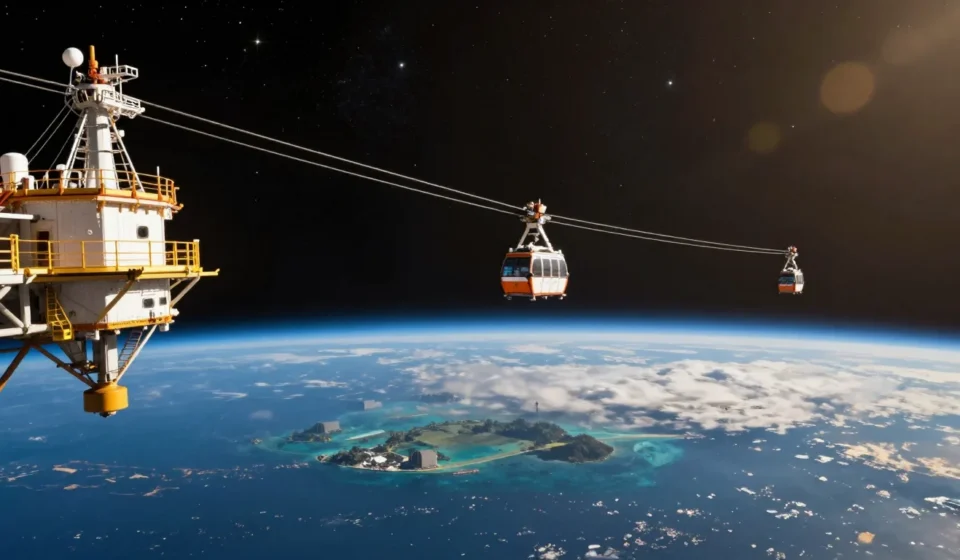
A space elevator is a tether anchored on Earth, stretching to a counterweight beyond geostationary orbit (35,786 km up). Climbers would travel along it, delivering payloads without burning fuel.
The idea dates to Tsiolkovsky in 1895, but we've never built one due to enormous tensile strength requirements.
The tether must support its own weight plus the climber's load. The strongest steel breaks at about 2 GPa, but a space elevator tether needs around 130 GPa.
That's far beyond anything we currently produce, and even advanced alloys fall short.
Carbon Nanotubes: A Potential Solution
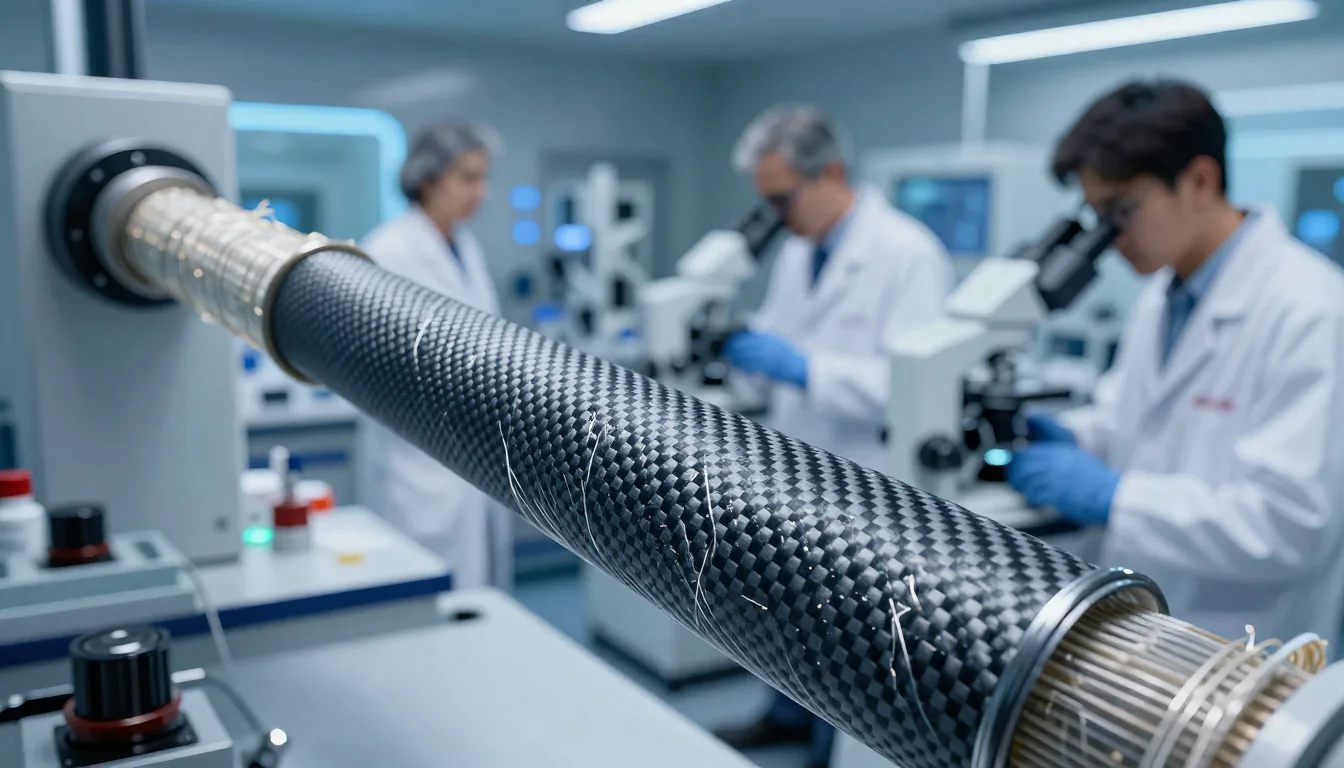
Carbon nanotubes (CNTs) were once the great hope. Individual CNTs have tensile strengths up to 63 GPa, close to the requirement.
However, manufacturing defect-free macroscopic cables is a major challenge.
Current CNT fibers barely reach 10 GPa due to microscopic flaws. Scientists are exploring graphene ribbons and boron nitride nanotubes as alternatives.
Graphene has theoretical strength but is difficult to weave into long cables.
Boron nitride nanotubes resist heat better but are harder to produce in bulk. Even if we create a strong tether, other problems remain.
Earth's atmosphere corrodes materials, and ozone attacks carbon structures.
The tether would need a protective coating, adding mass and complexity. Additionally, micrometeoroid impacts could sever the cable, so redundancy is essential. These factors directly impact space elevator feasibility.
Climbing the Cable: Engineering Hurdles
The climber must travel thousands of kilometers at high speed to avoid spending days in space. Power delivery is tricky—options include laser beams or wireless microwave transmission.
Both lose efficiency over distance and can overheat the tether.
Additionally, the tether will vibrate and sway due to gravitational forces, winds, and Coriolis effects. Active stabilization systems would be needed, adding more mass.
Any failure in the cable could cause catastrophic debris, making safety a key concern.
Another overlooked issue is the anchor point. It must be on the equator, ideally in a stable weather region like the Pacific Ocean.
Floating platforms might work, but they introduce sea motion and storm risks.
Potential Benefits Worth the Risk
If we overcome these challenges, a space elevator would slash launch costs from thousands of dollars per kilogram to just hundreds. No more rocket fuel explosions; reusable climbers could send satellites, tourists, or asteroid mining equipment cheaply.
It could also enable large-scale projects like space solar power stations. A tether would allow us to build in orbit without the mass constraints of rockets. Check out Popular Science & Space for more on orbital infrastructure.
There’s even talk of building one on the Moon or Mars first, where lower gravity makes materials easier. Lunar elevators could use existing materials like Kevlar, but they’d still need Earth supply chains. However, such a project would test the concept and improve space elevator feasibility overall.
Assessing Tether Viability: Is It Inevitable?
Many experts believe a space elevator is possible within this century if nanotechnology advances. The Japanese Obayashi Corporation has a roadmap for a 2050 elevator.
But funding is a huge barrier—estimates run over $10 billion.
For now, we're stuck with rockets, but the dream pushes materials science forward. Carbon nanotubes already improve composites, and research into ultra-strong cables benefits everything from bridges to body armor.
Moreover, space debris remains a threat that must be mitigated.
So, space elevator feasibility remains low, but not zero. Curiosity drives innovation. As physicist Freeman Dyson said, the space elevator is ‘a really good idea that isn’t quite ready yet.’
Learn more from NASA’s NIAC study or Space.com’s overview. For deeper material science, see Wikipedia’s space elevator page.