
The Art of Tea Brewing
Brewing tea is a ritual that connects us to centuries of tradition. Achieving the perfect cup of tea requires understanding the delicate balance of water, leaves, and time. Every step influences flavor, from the quality of water to the steeping duration.
Many tea drinkers overlook these variables, resulting in bitter or weak brews. With a few mindful adjustments, you can transform your daily cuppa into an extraordinary experience. Gastronomy & Food enthusiasts appreciate these nuances.
The Importance of Water Quality
Water makes up over 99% of your tea, so its quality is paramount. Using filtered water free of chlorine and impurities allows the tea's true flavors to shine.
Tap water with high mineral content can alter taste.
For the perfect cup of tea, always use fresh cold water and avoid reboiling. Water that has been boiled loses dissolved oxygen, resulting in a flat taste.
This simple step elevates your brew significantly.
Understanding Water Temperature
Water temperature is critical because it extracts different compounds from tea leaves. Too hot, and you release tannins that cause bitterness; too cool, and the flavor remains locked inside.
Each tea variety has an optimal temperature range:
- White tea: 160–175°F (70–80°C) — delicate and floral.
- Green tea: 170–185°F (75–85°C) — grassy and vegetal.
- Oolong tea: 185–205°F (85–96°C) — complex and aromatic.
- Black tea: 200–212°F (93–100°C) — bold and robust.
- Herbal tea: 212°F (100°C) — full extraction required.
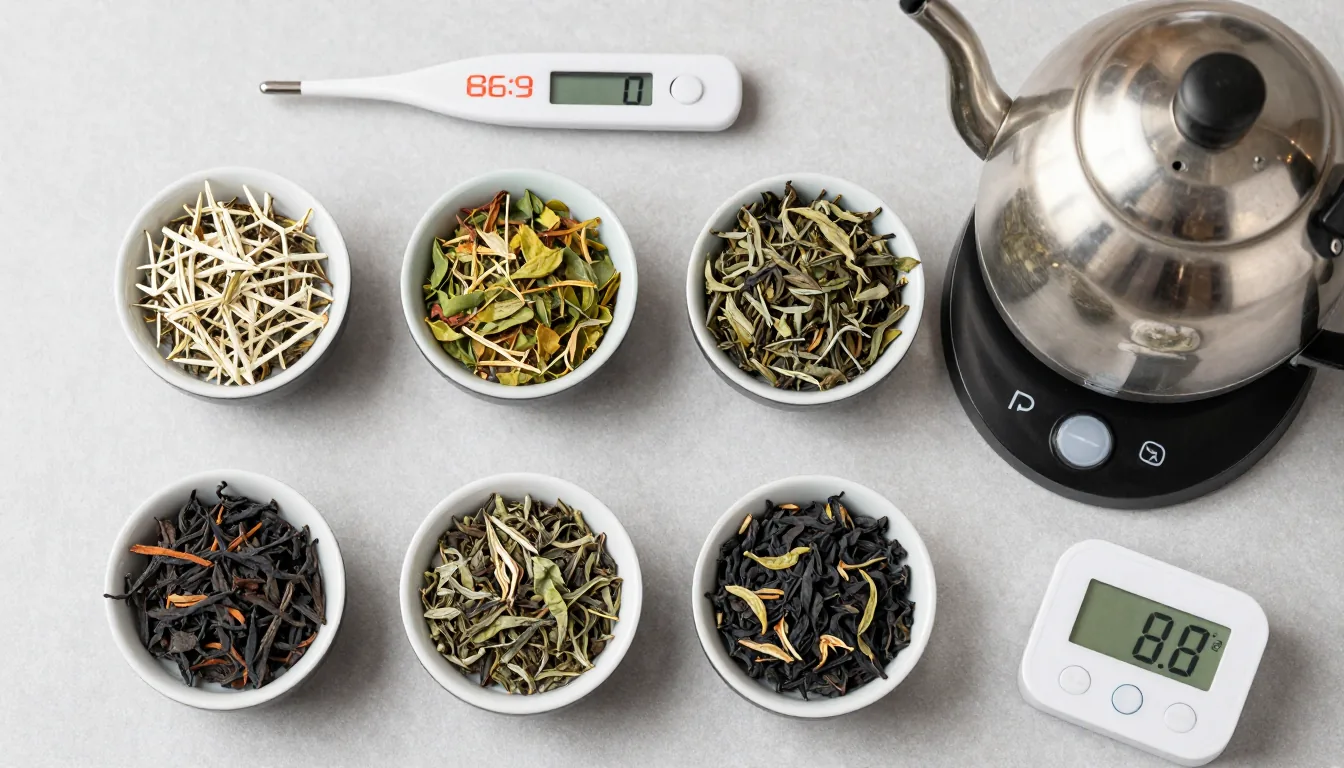
Use a thermometer for precision, or boil water and let it cool for a few minutes. For example, letting boiling water sit for one minute drops it to about 200°F, suitable for black tea.
Mastering temperature is a key step toward your perfect cup of tea.
Steeping Times That Make a Difference
Time works with temperature to define strength and flavor. Oversteeping leads to bitterness; understeeping leaves a weak infusion.
General guidelines:
- White tea: 4–5 minutes.
- Green tea: 2–3 minutes.
- Oolong tea: 3–5 minutes.
- Black tea: 3–5 minutes.
- Herbal tea: 5–7 minutes.
If using powdered matcha, whisk immediately and consume within one minute. For large-leaf teas, you may steep longer—always taste and adjust.
The right steeping time ensures optimal flavor extraction.
Choosing the Right Tea Variety
The world of tea is vast: from single-origin Darjeeling to smoky Lapsang Souchong. Loose-leaf teas generally offer superior flavor compared to bagged versions, as they have more room to expand.
Consider your mood and the time of day; experiment to find your perfect cup of tea.
A light green tea like Sencha is perfect for mornings, while a rich Pu-erh complements afternoon relaxation. Exploring different cultivars helps you discover preferences and enhances your brewing ritual.
The Perfect Cup of Tea: A Step-by-Step Guide
To achieve the perfect cup of tea, follow these steps: Start with fresh, cold water—filtered if possible. Preheat your teapot or cup by rinsing with hot water.
Add one teaspoon of loose-leaf tea per cup (or one tea bag).
Pour water at the correct temperature and steep for the recommended time. Remove the leaves or bag promptly.
Serve in a warmed cup to maintain temperature. Add milk, sugar, or lemon based on tradition—black teas often pair with milk, while green teas are best plain.
Common Mistakes and How to Avoid Them
Using low-quality water or reboiling water (which depletes oxygen) can flatten the taste. Also, squeezing the tea bag releases bitterness—let it drip naturally.
Store tea in an airtight container away from light and moisture to preserve freshness.
For a deeper dive into water chemistry, check out this guide on water temperature. For more tea tips, visit Harney & Sons’ brewing guide. By mastering these elements, you can consistently enjoy the perfect cup of tea at home.