
Direct Injection vs Port Injection: Fuel Delivery Fundamentals
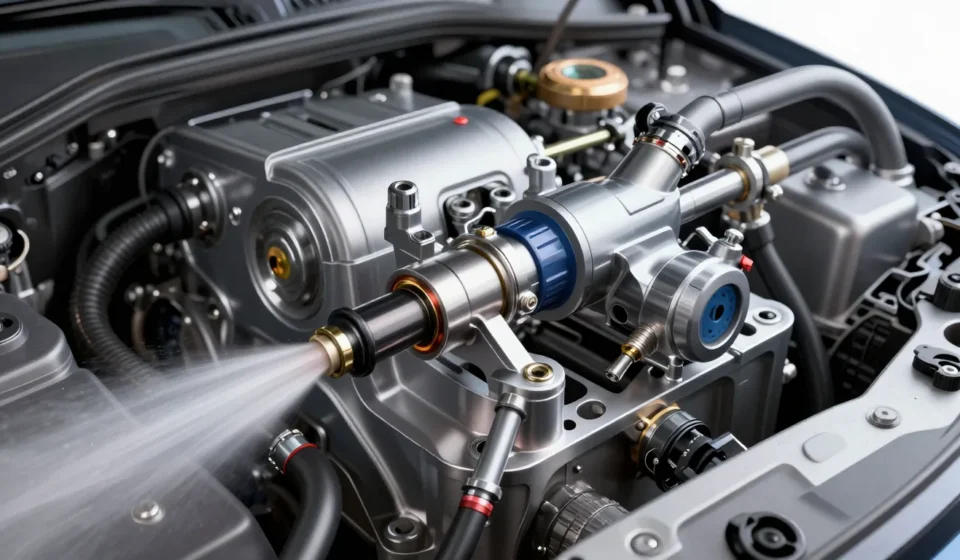
In the debate of direct injection vs port injection, each system delivers fuel differently. Port injection sprays fuel into the intake port, mixing with air before entering the cylinder. This allows fuel to wash over intake valves, keeping them clean.
Direct injection injects fuel directly into the combustion chamber at high pressure (often 2000+ psi). It enables precise fuel metering and improved thermal efficiency.
The core trade-off is between valve cleaning (port) and efficiency/power (direct).
Modern engines often combine both systems in a dual-injection setup—Toyota’s D-4S, for example—to capture the strengths of each. But in a standalone comparison, direct injection vs port injection reveals clear winners for specific goals. Understanding these differences is key to choosing the right engine.
Thermal Efficiency and Fuel Economy: Direct Injection Wins
In the direct injection vs port injection efficiency comparison, direct injection shows clear benefits. Its high-pressure spray creates finer fuel droplets, which evaporate quickly and absorb heat from the cylinder charge.
This charge cooling effect reduces knock tendency, allowing higher compression ratios and more aggressive spark timing.
The result is a 3–5% improvement in thermal efficiency over port injection in real-world driving. Additionally, direct injection prevents fuel from wetting intake port walls, eliminating fuel film losses.
For turbocharged engines, this charge cooling also lowers exhaust gas temperatures, enabling safer boost levels without enrichment.
However, these gains come at the cost of increased particulate emissions due to less time for air-fuel mixing. Yet for fuel economy, direct injection dominates.
In controlled tests, a 2.0L turbo engine with DI achieved 32 MPG highway versus 29 MPG with port injection—a 10% improvement.
Carbon Buildup: The Port Injection Advantage
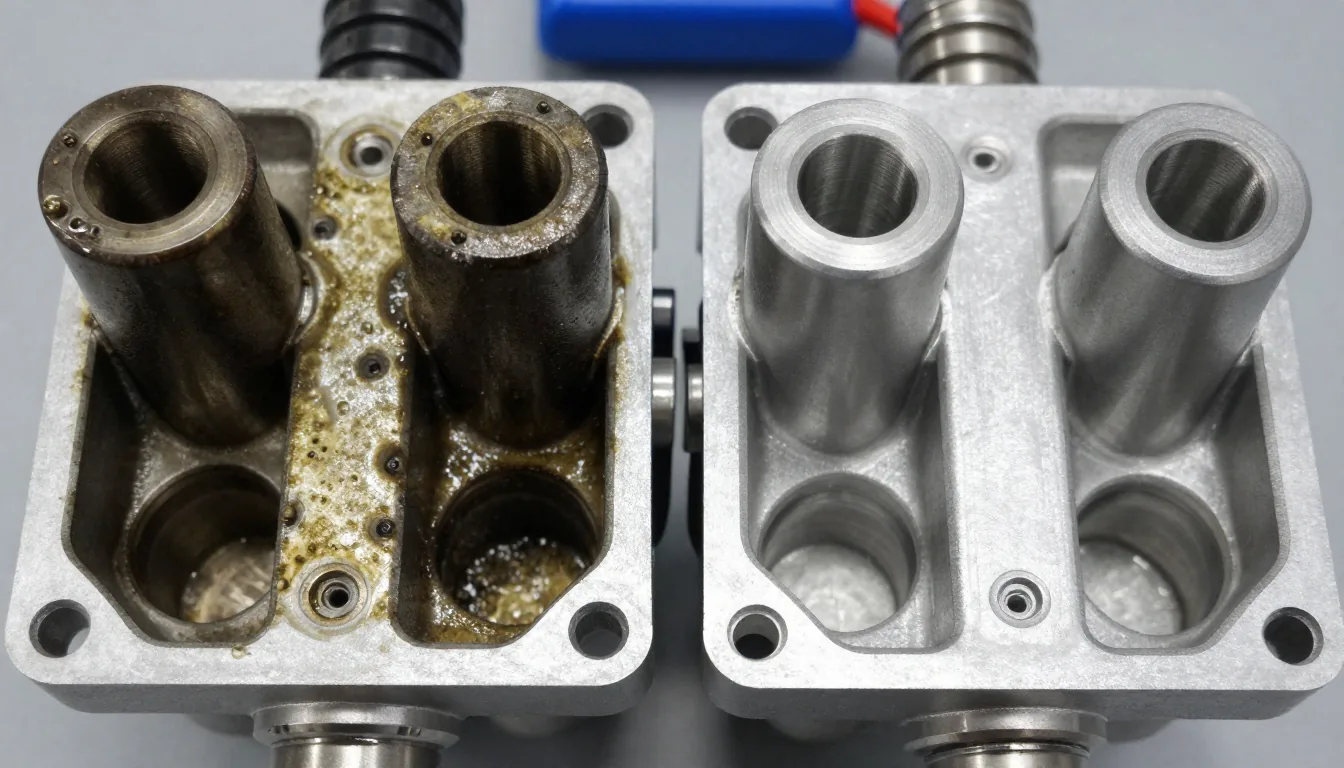
When evaluating direct injection vs port injection for long-term reliability, port injection wins. Its fuel spray continuously cleans intake valves, preventing deposit buildup.
Direct injection, by contrast, never washes the valves, allowing oil vapors and combustion byproducts to bake onto valve stems.
This carbon buildup restricts airflow, reduces power, and can cause misfires. Typical symptoms appear after 30,000–60,000 miles, depending on oil quality and driving habits.
Measures like oil catch cans, walnut blasting, or dual injection can mitigate the issue, but port injection inherently avoids it.
However, modern direct injection systems with advanced PCV designs have reduced buildup rates—but not eliminated them. For owners planning high-mileage reliability, port injection holds a clear edge.
Your driving style also matters: short trips worsen carbon buildup in DI engines.
Mitigation Strategies for Direct Injection
- Install a high-quality oil catch can to reduce PCV oil mist.
- Use fuel additives containing polyether amine (PEA) every 3,000 miles to soften deposits.
- Perform walnut blasting every 40,000–60,000 miles as preventive maintenance.
Performance Tuning Potential: Direct Injection Dominates
For tuners, direct injection offers immense flexibility. With direct control over injection timing—during intake or compression stroke—you can tailor fuel delivery for peak power or lean cruise.
High-pressure pumps support aftermarket boost levels without needing larger injectors.
Many direct injection engines from Bosch Motorsport and Continental can handle 500+ HP on stock fuel systems when properly tuned. Port injection is limited by injector size and fuel pressure (typically 40–60 psi). Upgrading requires larger injectors, higher-flow fuel pumps, and often a standalone ECU.
While port injection can make decent power, its lack of charge cooling and inability to precisely time injection hurt knock-limited output. For race applications, direct injection vs port injection favors the direct approach, often paired with auxiliary port injection as the gold standard. Understanding the direct injection vs port injection trade-offs helps tuners choose the best path.
Knock Resistance Comparison
On a 93-octane fuel, a 2.0L direct injection engine can run up to 2° more spark advance than a port injection version at the same boost. This translates to 10–15 lb-ft more torque.
For ethanol blends (E85), direct injection’s cooling effect allows even more aggressive timing.
Practical Recommendations
If you value long-term reliability with minimal maintenance, choose a car with port injection or dual injection. For maximum fuel economy and tuning flexibility, direct injection is the better choice. Understand that Automotive & Mobility trends point toward hybrid systems—like those from Toyota, Ford, and Hyundai—which combine both to eliminate carbon buildup while retaining efficiency.
Your driving style matters: short trips worsen carbon buildup in direct injection engines. Frequent highway use helps burn off deposits.
Ultimately, match the induction type to your ownership horizon and performance goals. The direct injection vs port injection decision depends on your priorities.