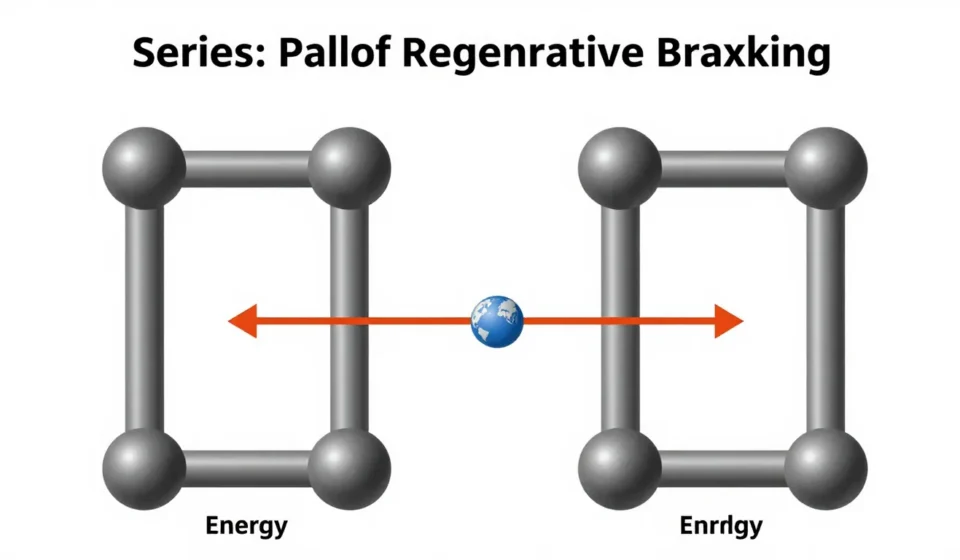

Understanding the regenerative braking comparison between series and parallel architectures is crucial for any EV enthusiast. Series systems integrate the motor and friction brake into one pedal, while parallel systems blend them independently. This article dissects the engineering differences, efficiency trade-offs, and real-world driving feel.
Regenerative Braking Comparison: Architecture Fundamentals
In a series system, the brake pedal acts solely on the regenerative motor until deceleration exceeds a threshold. Then friction brakes blend in seamlessly.
This design enables one-pedal driving, where lifting off the accelerator initiates regeneration. Parallel systems, conversely, always blend regeneration and friction brakes proportionally based on pedal position and vehicle state.
The regenerative braking comparison reveals that series systems prioritize energy capture, while parallel systems favor consistency.
- Series: Motor regen alone at low pedal travel; friction added as needed.
- Parallel: Fixed or dynamic blend of regen and friction from initial pedal press.
Efficiency and Energy Recovery Differences
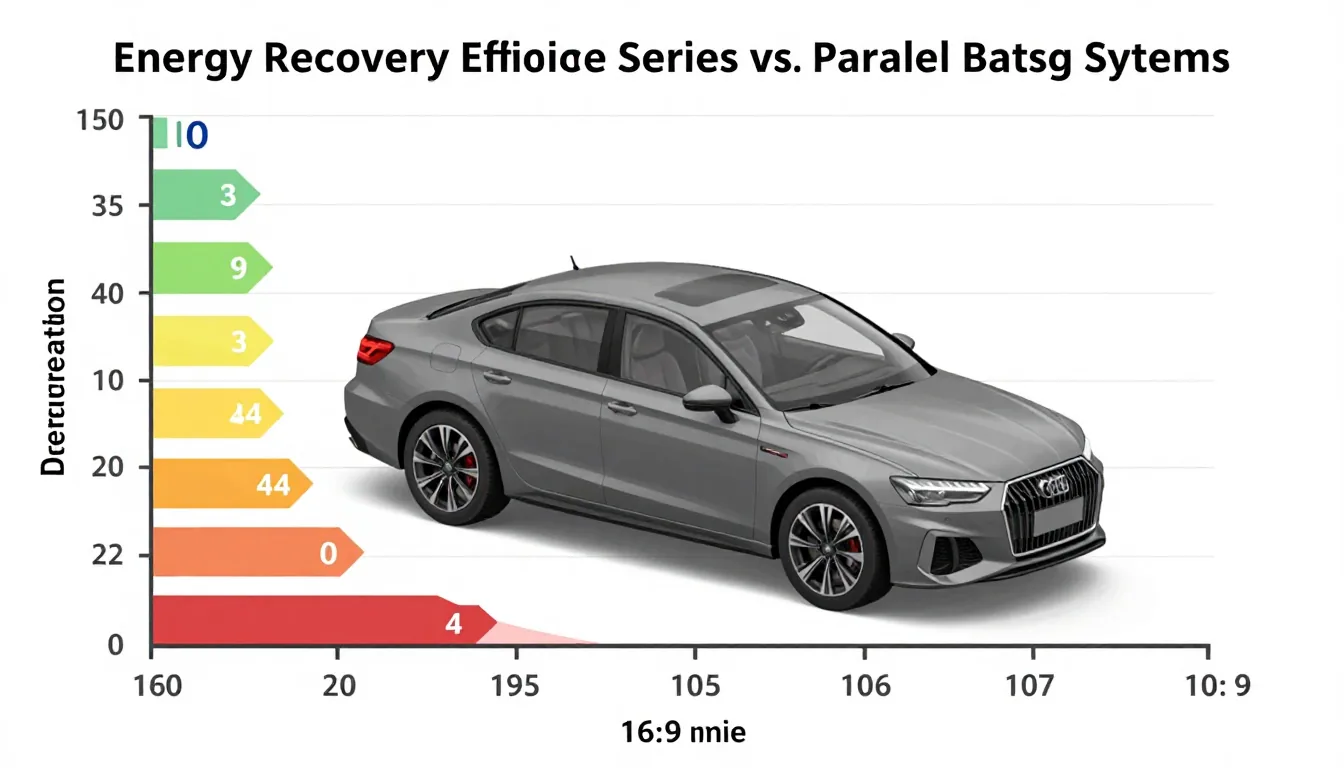
Series systems recover more energy because they prioritize regeneration over friction at low decelerations. Typical recovery rates exceed 70% in urban stop-and-go driving.
Parallel systems sacrifice some energy for consistent pedal feel, recovering around 50–60% due to unavoidable friction losses.
Thermal management also differs: series systems can run the motor hotter from sustained regen, while parallel systems distribute heat across friction brakes and motor, reducing peak temperatures. For maximum efficiency, series is superior, but component durability may suffer.
A key aspect of any regenerative braking comparison is the trade-off between efficiency and hardware stress.
Real-world tests show series systems recovering up to 75% in heavy traffic, while parallel systems average around 55%. These figures highlight the efficiency advantage of series designs in urban environments.
Driving Dynamics and Pedal Feel
Series systems offer aggressive regen that allows one-pedal driving—ideal for enthusiasts but jarring for drivers used to coasting. Parallel systems provide a linear, conventional brake feel, easing the transition from ICE vehicles.
The blend in parallel systems must be calibrated precisely to avoid a “dead” pedal at the top of travel.
Regen fade is a known issue: in series systems, heavy braking overrides regen, causing a sudden shift to friction only. Parallel systems maintain consistent blend, so pedal feel is uniform regardless of temperature or state of charge.
The calibration challenge is significant, as engineers must balance pedal feel across all driving conditions.
Drivers new to EVs often find the series system’s regen surprising, while parallel systems feel more familiar. This factor alone can sway purchasing decisions, making the regenerative braking comparison relevant beyond technical specs.
Implementation Complexity and Cost
Series systems require advanced electronic brake boosters and redundant fallback modes (e.g., Bosch iBooster). They are more expensive but allow full regeneration down to very low speeds.
Parallel systems can use conventional vacuum boosters with a proportioning valve, reducing cost and complexity, but often stop regeneration above 10–20 km/h.
For manufacturers, series systems suit high-performance EVs (e.g., Tesla Model 3) while parallel systems dominate mainstream hybrids (e.g., Toyota Prius). The choice hinges on target price point and brand identity.
For high-volume models, parallel systems offer cost savings that lower entry prices, making EVs more accessible. This affordability can accelerate EV adoption in mass markets.
A thorough regenerative braking comparison thus includes cost-benefit analysis for automakers.
Blunt Consumer Advice: Which System Is for You?
If you want maximum energy recovery and enjoy one-pedal driving, opt for an EV with a series regenerative braking system. Be prepared for a learning curve and occasional inconsistency under hard braking.
If you prioritize smooth, predictable brake feel and don’t mind slightly lower efficiency, a parallel system will serve you better—especially if you transition from a conventional car. Ultimately, the best choice depends on your driving style and tolerance for regen aggressiveness.
For deeper analysis of EV drivetrains, visit our Automotive & Mobility category. For technical specs, consult Bosch’s regenerative braking page and DOE’s overview.