
Electric vs Hydrogen Efficiency: Well-to-Wheel Breakdown
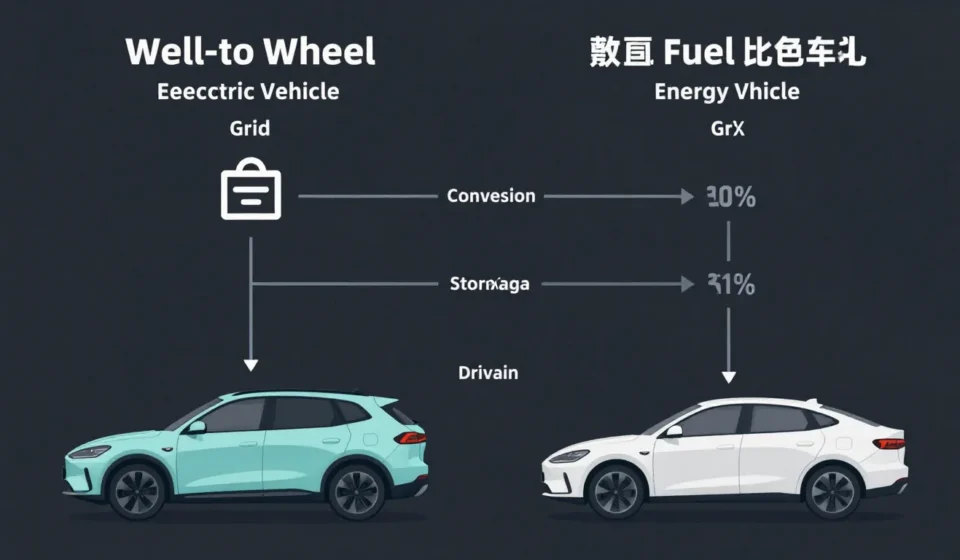
When comparing electric vs hydrogen efficiency, the well-to-wheel (WTW) metric provides the clearest picture. Battery electric vehicles (BEVs) convert grid electricity to motion with about 70–80% efficiency, considering charging and drivetrain losses.
Hydrogen fuel cell vehicles (FCEVs) start with natural gas or electrolysis, then compress, transport, and finally convert hydrogen back to electricity in the fuel cell. This yields a WTW efficiency of only 25–35%.
The math is brutal: for every 100 kWh of renewable energy, a BEV delivers ~70 kWh to the wheels, while an FCEV delivers ~30 kWh. This stark difference in electric vs hydrogen efficiency is a critical factor for consumers and policymakers.
But many still question whether electric vs hydrogen efficiency is the only deciding factor. Let’s explore deeper.
Infrastructure Realities: Charging vs Refueling
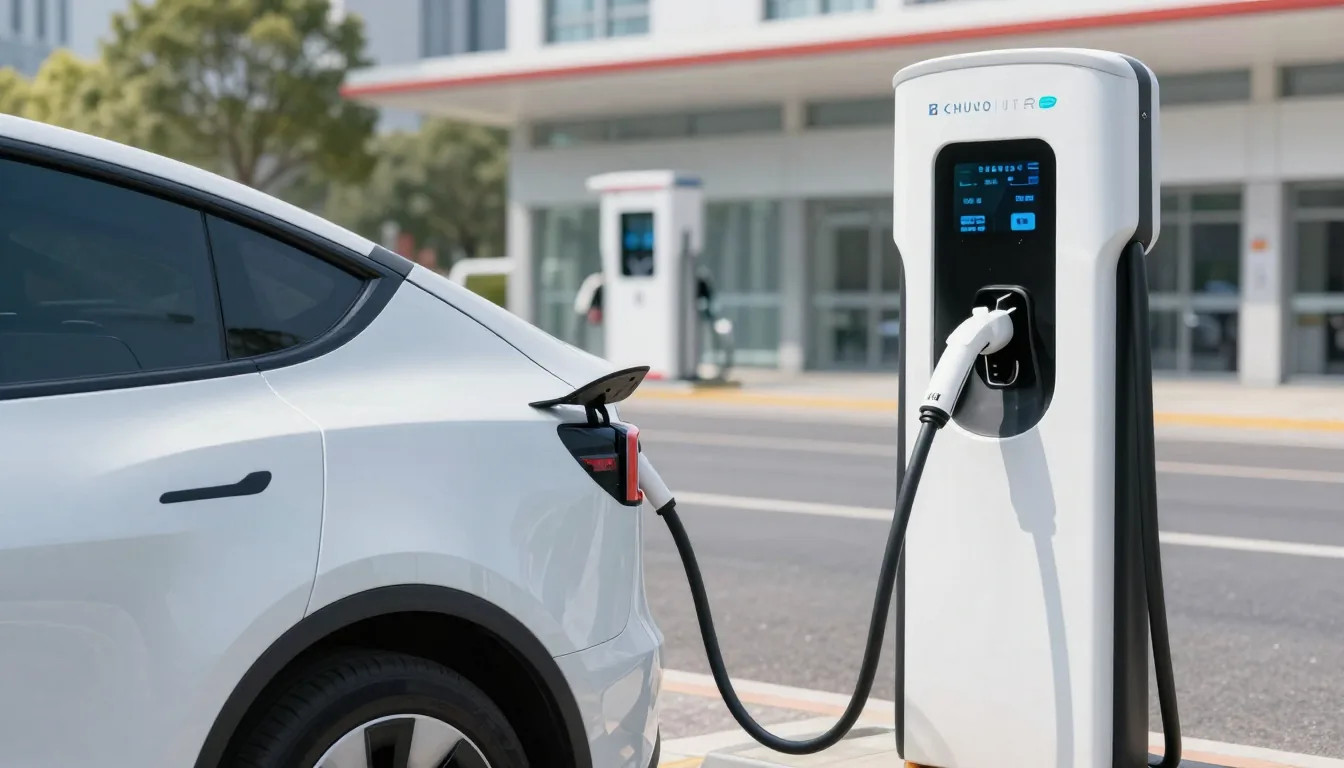
Understanding electric vs hydrogen efficiency requires looking beyond the vehicle to the infrastructure. BEV charging networks are expanding rapidly, with DC fast chargers delivering 150–350 kW, adding 200 miles in 15–20 minutes.
Home charging offers overnight convenience at 3–7 kW.
Hydrogen refueling stations are far sparser: globally only about 1,000 exist, mostly in Japan, Korea, and California. Each station costs $2–5 million to build, versus $50,000–200,000 for a DC fast-charging hub.
Refueling a hydrogen car takes 3–5 minutes, but station reliability and hydrogen availability remain problematic.
For daily driving, BEVs win on convenience and cost. For quick long-distance refills, hydrogen currently has an edge only on paper.
Energy Losses in Battery Electric Vehicles
BEV losses occur mainly in charging (5–10% AC to DC conversion), battery internal resistance (2–5%), and drivetrain friction (5–10%). Regenerative braking recovers some energy, typically 15–25% in city cycles.
The overall electric vs hydrogen efficiency gap is largely due to these minimal losses in BEVs.
Modern EVs like the Tesla Model 3 or Hyundai Ioniq 6 achieve 4–5 miles per kWh. This translates to a tank-to-wheel efficiency above 85%.
Minimal moving parts and lack of a thermal engine keep losses low.
Energy Losses in Hydrogen Fuel Cell Vehicles
FCEV efficiency suffers at every stage. Electrolysis to produce hydrogen is only 60–80% efficient.
Compression to 700 bar or liquefaction consumes 10–15% of the hydrogen’s energy content.
Transportation by truck or pipeline adds another 5–10% loss. Finally, the fuel cell stack itself operates at 50–60% efficiency under ideal conditions, and the electric motor adds 5–10% drivetrain loss.
The cumulative effect of these losses explains the poor electric vs hydrogen efficiency of FCEVs.
U.S. Department of Energy data confirms that FCEVs have roughly half the WTW efficiency of BEVs.
Environmental Impact: Beyond Tailpipe Emissions
Both drivetrains produce zero tailpipe emissions, but upstream impacts differ. BEVs powered by renewable grids have near-zero lifecycle emissions; even on a coal-heavy grid, they emit less CO2 per mile than a traditional hybrid.
Battery production is energy-intensive, but lifecycle analyses show BEVs break even after 15,000–30,000 miles compared to an internal combustion car. Hydrogen from steam methane reforming (95% of current production) emits ~10 kg CO2 per kg H2, worse than diesel per mile.
Green hydrogen from electrolysis using renewables avoids this, but remains expensive and energy-inefficient. Battery recycling is also more mature; fuel cell stacks contain platinum-group metals that are harder to recycle. The IEA’s Global EV Outlook projects BEVs will dominate passenger transport by 2030, with hydrogen better suited for heavy transport.
From an environmental perspective, electric vs hydrogen efficiency also affects carbon footprint. The lower the efficiency, the more primary energy needed, increasing overall emissions even with green sources.
Which Drivetrain Wins for You?
If you drive a passenger car under 200 miles daily, a BEV is clearly more efficient and cheaper. For most consumers, the electric vs hydrogen efficiency advantage of BEVs is decisive. The Automotive & Mobility landscape points to BEVs as the pragmatic choice for most consumers.
Hydrogen makes sense for trucks, buses, and trains where battery weight and charging time are prohibitive. For private cars, hydrogen’s efficiency penalty and infrastructure gaps make it a niche solution.
Don’t be swayed by the quick refueling promise—electricity wins on total cost of ownership and environmental impact. My blunt advice: buy a BEV now unless you need to cover 400+ miles daily in remote areas.