
Why a Systematic Road Trip Inspection Saves Your Vacation
A breakdown miles from home turns adventure into logistics nightmare. A thorough road trip inspection targets the five failure points that strand most vehicles: fluids, belts, hoses, brakes, and tires.
Spend 45 minutes under the hood and around the wheels to slash your risk of roadside drama.
Fluid Levels: The Lifeblood of Your Engine
Engine Oil: Check Level and Age
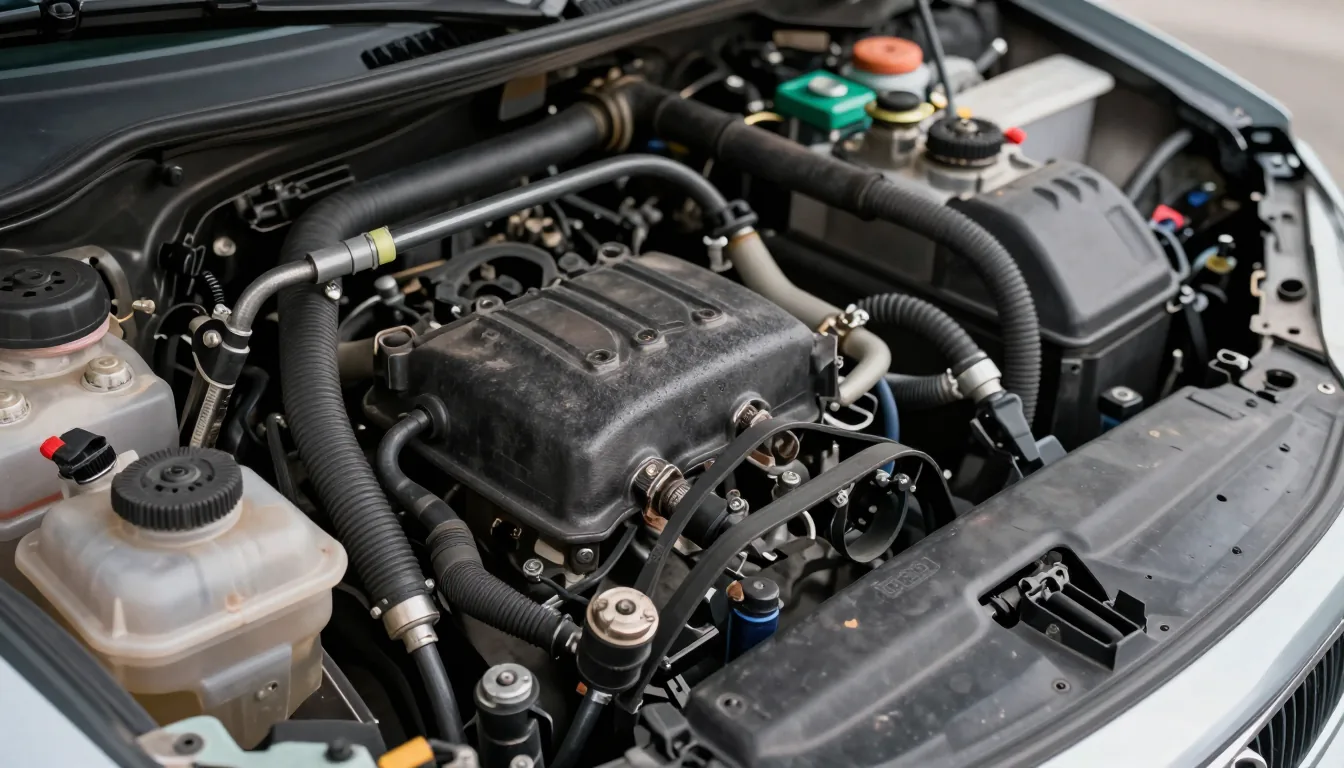
Pull the dipstick after a warm engine. Wipe, reinsert, and read the level.
Top off to the full mark with the correct viscosity—5W-30, 0W-20, etc.
If the oil is dark and gritty, change it before departure. Old oil loses shear strength and can't protect bearings at sustained high RPMs.
This is a crucial road trip inspection step.
Coolant: Verify Concentration and Level
With the engine cold, check the reservoir between min and max marks. Use a refractometer to confirm a 50/50 mix of antifreeze and distilled water.
Pure water boils at 100°C and freezes at 0°C—dangerous for desert climbs or mountain passes.
A 50/50 mix raises boiling point to ~108°C and lowers freezing to -37°C. This road trip inspection check prevents overheating in any climate.
Brake Fluid: Probe for Moisture
Brake fluid absorbs water, which boils under heavy braking and creates vapor lock—spongy pedal or total loss. Use a test strip or electronic tester.
If moisture exceeds 3%, flush the fluid.
Dot 4 or 5.1 fluids have higher dry boiling points (≥260°C) than Dot 3. Don’t skip this part of your road trip inspection.
Windshield Washer Fluid: A Simple Oversight
Bugs, dust, and road film accumulate fast over 500 miles. Fill the reservoir with a summer blend that includes bug-dissolving surfactants.
Never use water alone—it freezes and fails to cut grime.
Belts and Hoses: Preventing Sudden Shutdowns
Serpentine Belt Inspection
Look for cracks, fraying, glazing (shiny side), or missing ribs. A failed belt kills alternator, water pump, and power steering within minutes.
Replace every 60,000–100,000 miles or if any defect is found.
Tension should deflect no more than 1/2 inch under moderate thumb pressure. Belts and hoses are critical road trip inspection items that are often overlooked.
Radiator and Heater Hoses
Squeeze each hose while cold. Soft spots, bulges, or hardening indicate imminent rupture.
Check clamps for tightness—a loose clamp on a long uphill grade can blow the hose off.
Carry a spare hose and a multi-size clamp set. Adding these to your road trip inspection kit saves time on the road.
Brakes: Measure Friction Material and Hydraulics
Pad and Rotor Thickness
Remove a front wheel and measure pad friction material. Minimum thickness is usually 3mm—anything less risks metal-to-metal contact and rotor scoring.
Rotors should be free of deep grooves, cracks, or a lip at the edge.
Warpage can be felt as pedal pulsation during braking. As part of your comprehensive road trip inspection, measure pad thickness carefully.
Brake Lines and Calipers
Rubber brake hoses can crack and balloon under pressure. Inspect for chafing or swelling.
Steel braided lines are more durable but check fittings for corrosion.
Caliper slide pins must move freely; stuck pins cause uneven wear and dragging brakes. Include these checks in your road trip inspection routine.
Tires: The Sole Contact with the Road
Tread Depth and Wear Patterns
Use a tread depth gauge; 4/32" (3.2mm) is the minimum safe for wet highways. The penny test (Lincoln's head visible) indicates 2/32"—replace immediately.
Uneven wear points to misalignment or underinflation.
Rotate if needed before the trip. A thorough road trip inspection includes checking tread depth and pressure.
Pressure and Spare
Check cold pressures per the door jamb sticker—not the sidewall max. Overinflated tires reduce contact patch and increase puncture risk; underinflated ones overheat.
Don't forget the spare—inflate to 60 psi (typically) and verify the jack and wrench are present.
Lighting and Wipers: Visibility is Safety
Test all exterior lights: headlights (high and low), taillights, brake lights, turn signals, and hazards. Replace any burned-out bulbs.
Wipers should clear the glass without streaking—replace if they leave arcs or chatter.
Top off washer fluid again after testing. Clear visibility is a non-negotiable road trip inspection goal.
Battery and Charging System
Clean any corrosion from terminals—baking soda and water scrub works. Load test the battery if it's over three years old.
A cold-cranking-amp (CCA) reading within 80% of spec is acceptable.
Check alternator output: 13.5–14.5 volts at idle with accessories on. Voltage below 13V means the alternator is failing.
Your road trip inspection should also cover the battery and charging system.
For a deeper dive into long-term vehicle maintenance, visit the Automotive & Mobility section. Additional resources: AAA’s vehicle inspection checklist (AAA Road Trip Inspection) and the National Institute for Automotive Service Excellence (ASE Maintenance Checklist). See also Car and Driver’s pre-trip guide.