Proper Headlight Adjustment: Engineering the Perfect Beam for Optimal Visibility

Why Proper Beam Aim Matters
Correct headlight adjustment is not an optional cosmetic tweak—it is a safety-critical alignment that directly affects your ability to see and be seen. A misaimed beam either blinds oncoming traffic or leaves you straining into darkness. Aim tolerances are measured in fractions of a degree; even a 0.5° error can reduce visibility by 20 meters.
Modern headlamps, especially LED projectors, have sharp cutoff lines that demand precise vertical and horizontal alignment. Factory settings are a baseline—load changes, suspension wear, or bulb replacements can shift the beam.
This guide provides the mechanical procedure to restore proper aim.
Pre-Installation Checks
Before any headlight adjustment, inspect the headlamp housing for damage, moisture, or loose mounts. Clean the lens thoroughly—dirt or haze scatters light and invalidates your aiming marks.
Verify that your vehicle is on level ground with tire pressures at spec and the fuel tank at least half full.
If you carry heavy equipment regularly, simulate that load during adjustment. For example, if you always run with a roof rack, leave it on.
The goal is to replicate real-world ride height for accurate beam aim.
Measuring and Marking the Wall
Park the car 25 feet (7.6 meters) from a flat, vertical wall. Mark the wall with tape: first measure the height from the ground to the center of each headlight lens—record this as H.
Then draw a horizontal line at height H across the wall. Next, draw a vertical line that aligns with the vehicle's centerline.
For each headlight, also draw a vertical line corresponding to its lateral center.
These marks define the target zones. The low‑beam cutoff should fall exactly on the horizontal line, with the step at the vertical lines.
Use a tape measure and level for accuracy; eyeballing will produce errors that ruin your headlight adjustment.
Headlight Adjustment Procedure: Step-by-Step
Locate the adjustment screws—usually two per headlamp (vertical and horizontal). Use a screwdriver or hex key; some modern units require a long Torx bit.
Turn the vertical adjuster: turning clockwise typically raises the beam, counter‑clockwise lowers it. For horizontal, clockwise moves the beam right (driver side aims leftward slightly).
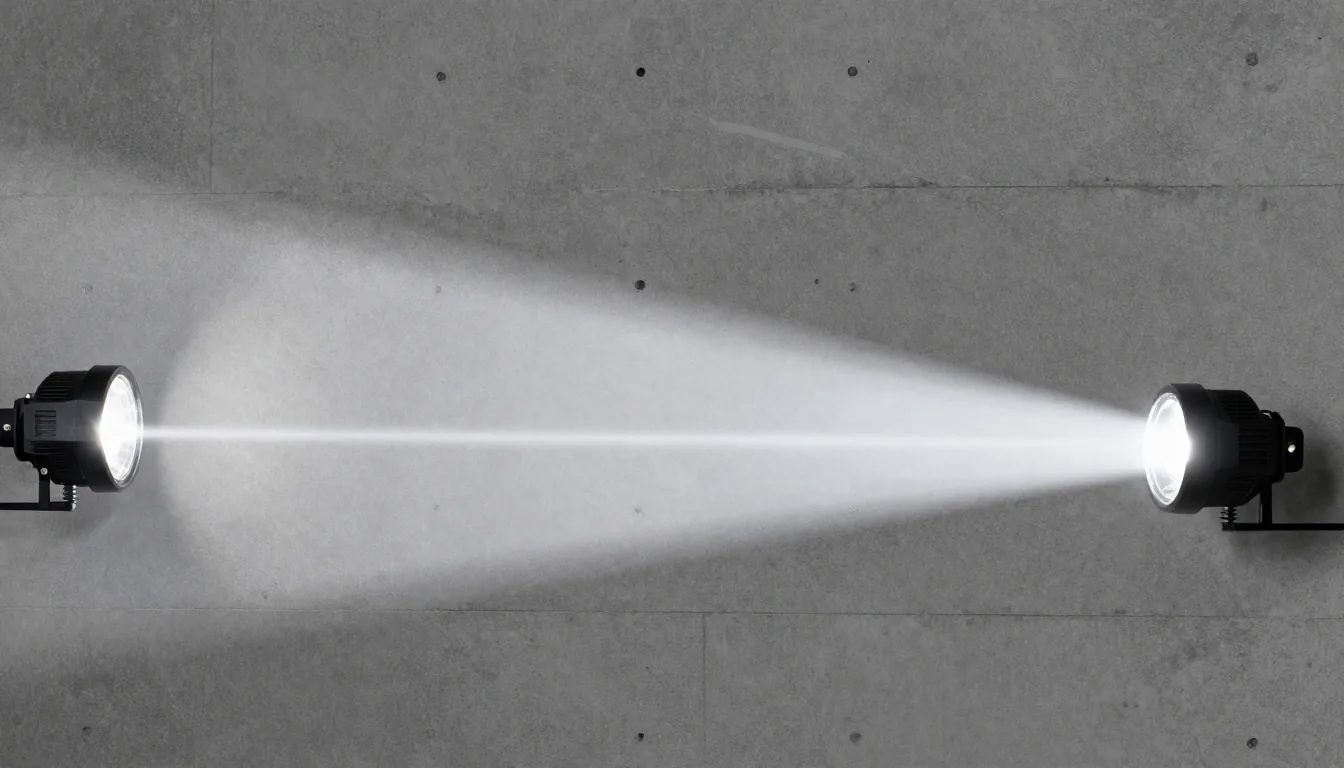
Start with the driver‑side headlight. Cover the passenger‑side lens with cardboard, then adjust the driver beam so the cutoff line is exactly at the horizontal mark and the step aligns with the vertical line.
Repeat for the passenger side. Both beams should overlap symmetrically for optimal road illumination.
After adjustment, verify by sitting in the driver seat and having an assistant toggle the high beams. The high‑beam pattern should illuminate above the cutoff line without excessive spread.
If the pattern appears skewed, recheck the marks—common mistakes include misaligned vertical lines or an unlevel floor.
Legal Requirements and Beam Cutoffs
In the US, Federal Motor Vehicle Safety Standard No. 108 prohibits headlamps from producing glare, but does not specify a numerical aim specification.
State laws vary; most follow SAE J1383 guidelines: vertical aim between 0.4° and 0.8° down (―0.5° is typical). For horizontal aim, the beam center must not deviate more than 2 inches left or right of the vertical line at 25 feet.
In Europe, UN Regulation No. 48 mandates a precise downward slope: 1.0–1.5% (10–15 cm drop at 10 meters) for low beams.
The cutoff must be flat on the left side for left‑hand traffic, with a rising step on the right to illuminate road signs. Always check local regulations—aftermarket LED swaps are illegal in many jurisdictions if they alter the beam pattern.
Such modifications often require a professional headlight adjustment to remain legal.
Final Verification and Real-World Testing
Take the vehicle for a night drive on an unlit road. Approach a parked car at 50 meters; the low beam should illuminate the rear bumper no higher than license plate height.
Oncoming traffic: if you receive flashing high beams, your aim is too high. If you struggle to see curves or signs, aim is too low.
Repeat headlight adjustment every two years or after major suspension work. For vehicles with automatic leveling (mandatory on HID/LED projectors), ensure the sensors are recalibrated—do not override them manually.
For standard halogen lamps, a simple screwdriver adjustment every 20,000 miles keeps visibility optimal.
For more car maintenance guides, visit our Automotive & Mobility category. Also, consult IIHS headlight ratings and DMV aiming guide for additional reference.