
Vitamin C Derivatives Comparison: Why It Matters
L-ascorbic acid is the gold standard for brightening, but its instability and low pH limit formulation. Enter vitamin C derivatives—stabilized forms that penetrate skin and convert to active ascorbic acid. This vitamin C derivatives comparison evaluates key players: ascorbyl glucoside, tetrahexyldecyl ascorbate, and others.
Each derivative offers unique benefits in stability, pH tolerance, and efficacy. Understanding these differences helps you choose the right serum for your skin type and goals. A thorough vitamin C derivatives comparison reveals which form delivers the best brightening results with minimal irritation.
Stability and Efficacy Profiles
Stability is critical—L-ascorbic acid oxidizes rapidly when exposed to air and light. Derivatives resist degradation, ensuring longer shelf life and consistent delivery.
Efficacy depends on how well the derivative converts to free ascorbic acid in the skin.
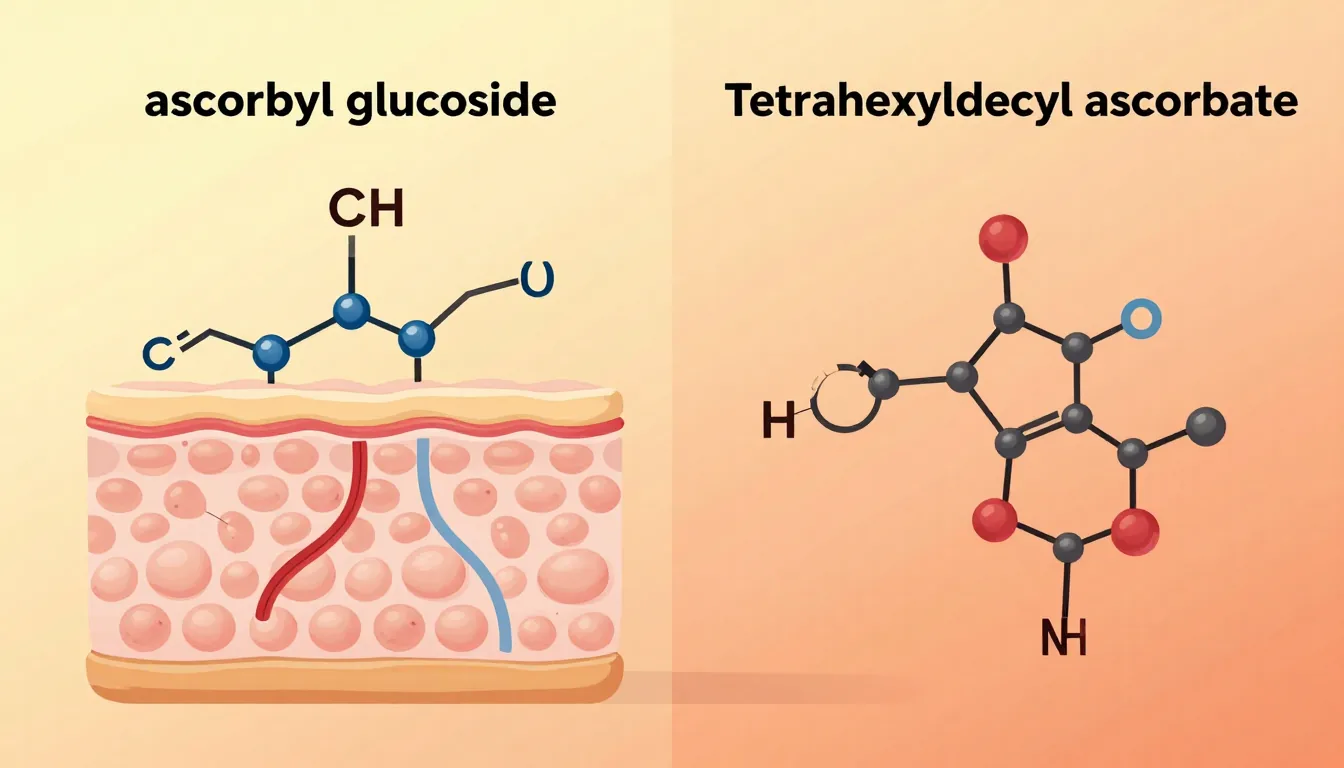
Enzymatic conversion rates vary: ascorbyl glucoside requires skin enzymes to cleave glucose, releasing ascorbic acid. Tetrahexyldecyl ascorbate (THD) is oil-soluble, penetrating deeper while bypassing water-based instability. This vitamin C derivatives comparison highlights these differences in depth.
In a recent study comparing derivatives, THD ascorbate showed superior penetration and antioxidant activity. However, ascorbyl glucoside offers better tolerance for sensitive skin.
Knowing these nuances is key to selecting an effective product.
Ascorbyl Glucoside: The Gentle Hydrator
Ascorbyl glucoside is a water-soluble derivative known for its stability and low irritation. It is ideal for sensitive skin types.
Studies show it effectively brightens hyperpigmentation with consistent use over 8–12 weeks.
However, its conversion rate is slower than other forms. For those seeking rapid results, THD ascorbate may be more effective. Ascorbyl glucoside works well in combination with Beauty & Skincare formulations aiming for gentle brightening.
Tetrahexyldecyl Ascorbate: The Oil-Soluble Powerhouse
THD ascorbate is lipid-soluble, allowing deeper penetration into the dermis. It is more potent on a per-molecule basis because it delivers ascorbic acid directly without enzymatic cleavage.
This derivative is stable at neutral pH, making it compatible with many skincare ingredients.
Clinical research indicates THD ascorbate improves skin luminosity and reduces fine lines faster than other derivatives. It is a top choice in anti-aging serums. Learn more about its mechanism from this NCBI study.
Magnesium Ascorbyl Phosphate: The Balanced Option
Magnesium ascorbyl phosphate (MAP) is a water-soluble derivative with excellent stability. It is less irritating than L-ascorbic acid and offers additional hydration benefits.
MAP works well for dry or dehydrated skin types.
Efficacy studies show MAP effectively inhibits melanin production, reducing dark spots over time. It also boosts collagen synthesis. A 2013 study confirmed MAP’s photoprotective effects, and in a broader vitamin C derivatives comparison, MAP stands out for its dual benefits.
Choosing the Right Derivative for Your Needs
Your skin type and concerns dictate the best derivative. For sensitive or dry skin, start with ascorbyl glucoside or MAP; for oily or aging skin, THD ascorbate delivers faster results.
Combination skin benefits from layered approaches.
Always check product pH—L-ascorbic acid requires pH below 3.5, while derivatives work near neutral. Pair with vitamin E and ferulic acid to boost efficacy. For more on synergies, read Healthline’s guide, and this vitamin C derivatives comparison can guide your purchase decisions.
How to Incorporate Derivatives into Your Routine
Apply vitamin C derivatives in the morning after cleansing and before sunscreen; use a few drops of serum, pressing gently into skin. Follow with moisturizer and SPF 30+.
Start with a lower concentration (10–15%) to assess tolerance.
Store serums in opaque, air-tight bottles to maintain stability; most derivatives last 6–12 months unopened. Discard if color or smell changes.
Consistency is key—visible improvements appear within 4–8 weeks.
With this vitamin C derivatives comparison, you can confidently select the ascorbic acid form that brightens best for your unique skin. Remember, the best derivative is the one you’ll use consistently. For more insights, consult a dermatologist.