
Understanding Dry Skin: The Role of Humectants, Emollients, and Occlusives as Key Ingredients for Dry Skin
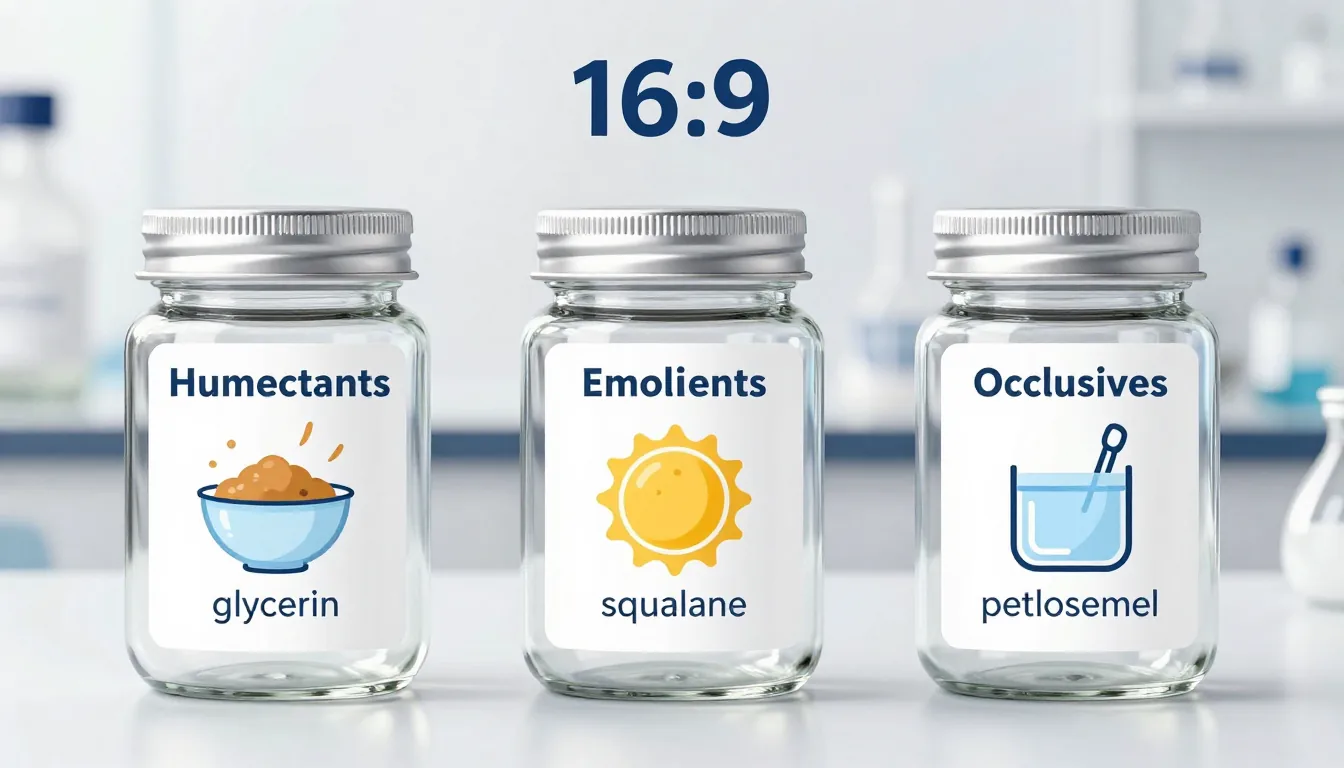
Dry skin lacks water and lipids, leading to tightness and flaking. The most effective moisturizers combine three categories of ingredients for dry skin: humectants that pull water into the skin, emollients that soften and fill gaps, and occlusives that seal moisture in.
Each plays a distinct role. Layering them correctly maximizes hydration.
To build an optimal routine, start with a humectant-rich serum, follow with an emollient moisturizer, and seal with an occlusive balm if needed.
This scientific approach ensures deep, lasting relief for dehydrated complexions. Look for proven ingredients for dry skin like glycerin and squalane in your products.
Humectants: The Water Magnets
Humectants attract water from the environment and deeper skin layers to the stratum corneum. Glycerin, a powerhouse humectant, can hold up to 50% of its weight in water.
It's safe for all skin types and boosts the skin barrier's hydration capacity.
Hyaluronic acid (HA) is another star humectant. Low-molecular-weight HA penetrates deeper, while high-molecular-weight HA sits on the surface.
A study in the Journal of Clinical and Aesthetic Dermatology found that HA significantly improves skin hydration and reduces trans-epidermal water loss (TEWL).
Top Humectant Ingredients to Look For
- Glycerin: Found in most moisturizers, effective and inexpensive.
- Hyaluronic Acid: Provides intense plumping; best applied to damp skin.
- Aloe Vera: Soothing and hydrating, ideal for sensitive dry skin.
- Panthenol (Pro-Vitamin B5): Attracts moisture and supports barrier repair.
Emollients: The Skin Softeners
Emollients fill microscopic gaps between skin cells. They smooth the surface and prevent water loss.
These oils or lipids mimic the skin's natural sebum.
Squalane, a hydrogenated form of squalene, is a non-comedogenic emollient. It absorbs quickly and strengthens the skin barrier.
It is particularly effective for dry skin because it regulates sebum production without clogging pores.
Ceramides are another critical emollient group. These lipid molecules make up 50% of the skin barrier.
Using a moisturizer with ceramides, like CeraVe or SkinFix, repairs the lipid matrix and reduces TEWL.
Additional Emollient Favorites
- Jojoba Oil: Closely mimics human sebum, excellent for balancing.
- Shea Butter: Rich in fatty acids, nourishes without being greasy.
- Caprylic/Capric Triglyceride: Lightweight emollient from coconut oil, spreads easily.
Occlusives: The Seal of Moisture
Occlusives form a protective film on the skin surface, preventing water evaporation. Petroleum jelly, the gold standard, reduces TEWL by 99%.
For dry skin, a thin layer over your moisturizer—the slugging method—can transform hydration overnight.
However, occlusives can feel heavy. Use sparingly on acne-prone areas.
Alternative occlusives include dimethicone (silicone), lanolin (for non-sensitive skin), and beeswax.
Plant-based occlusives like cocoa butter or shea butter also provide light occlusion. For daytime, opt for a moisturizer with a mix of humectants and emollients.
Choose formulas containing ingredients for dry skin like squalane plus a small amount of silicone occlusive.
How to Layer These Ingredients for Maximum Impact
The correct order matters: apply thinnest to thickest. Start with a humectant serum to damp skin (e.g., The Ordinary Hyaluronic Acid 2% + B5). Follow with an emollient moisturizer (e.g., CeraVe Moisturizing Cream with ceramides).
Finish with an occlusive balm or oil (e.g., Vaseline Petroleum Jelly) at night. This sequence locks in hydration and repairs the barrier. For daytime, skip the heavy occlusive and use a lighter moisturizer with squalane or dimethicone.
Always apply sunscreen after moisturizer. For more routine tips, visit our Beauty & Skincare archive. Incorporating the right ingredients for dry skin is key to a successful regimen.
Final Tips for Dry Skin Success
Avoid long, hot showers that strip oils. Use a gentle, non-foaming cleanser.
Exfoliate carefully with lactic acid 1-2 times per week to remove flakes.
Choose products labeled for dry skin. Always patch test new ingredients.
Remember, consistent layering of humectants, emollients, and occlusives is the proven strategy.
As research from the International Journal of Molecular Sciences confirms, optimizing these three categories dramatically improves skin hydration and barrier function. Look for these effective ingredients for dry skin in your daily routine.